New ads.

Showing posts with label human. Show all posts

Saturday, February 22, 2020

Earliest interbreeding event between ancient human populations discovered

Neanderthal and modern human skulls (stock image). | Credit: (c) Bruder / stock.adobe.com
Neanderthal and modern human skulls (stock image).

For three years, anthropologist Alan Rogers has attempted to solve an evolutionary puzzle. His research untangles millions of years of human evolution by analyzing DNA strands from ancient human species known as hominins. Like many evolutionary geneticists, Rogers compares hominin genomes looking for genetic patterns such as mutations and shared genes. He develops statistical methods that infer the history of ancient human populations.

In 2017, Rogers led a study which found that two lineages of ancient humans, Neanderthals and Denisovans, separated much earlier than previously thought and proposed a bottleneck population size. It caused some controversy -- anthropologists Mafessoni and Prüfer argued that their method for analyzing the DNA produced different results. Rogers agreed, but realized that neither method explained the genetic data very well.
"Both of our methods under discussion were missing something, but what?" asked Rogers, professor of anthropology at the University of Utah.
The new study has solved that puzzle and in doing so, it has documented the earliest known interbreeding event between ancient human populations -- a group known as the "super-archaics" in Eurasia interbred with a Neanderthal-Denisovan ancestor about 700,000 years ago. The event was between two populations that were more distantly related than any other recorded. The authors also proposed a revised timeline for human migration out of Africa and into Eurasia. The method for analyzing ancient DNA provides a new way to look farther back into the human lineage than ever before.
"We've never known about this episode of interbreeding and we've never been able to estimate the size of the super-archaic population," said Rogers, lead author of the study. "We're just shedding light on an interval on human evolutionary history that was previously completely dark."
The paper was published on Feb. 20, 2020, in the journal Science Advances.
Out of Africa and interbreeding
Rogers studied the ways in which mutations are shared among modern Africans and Europeans, and ancient Neanderthals and Denisovans. The pattern of sharing implied five episodes of interbreeding, including one that was previously unknown. The newly discovered episode involves interbreeding over 700,000 years ago between a distantly related "super-archaic" population which separated from all other humans around two million years ago, and the ancestors of Neanderthals and Denisovans.
The super-archaic and Neanderthal-Denisovan ancestor populations were more distantly related than any other pair of human populations previously known to interbreed. For example, modern humans and Neanderthals had been separated for about 750,000 years when they interbred. The super-archaics and Neanderthal-Denisovan ancestors were separated for well over a million years.
"These findings about the timing at which interbreeding happened in the human lineage is telling something about how long it takes for reproductive isolation to evolve," said Rogers.
The authors used other clues in the genomes to estimate when the ancient human populations separated and their effective population size. They estimated the super-archaic separated into its own species about two million years ago. This agrees with human fossil evidence in Eurasia that is 1.85 million years old.
The researchers also proposed there were three waves of human migration into Eurasia. The first was two million years ago when the super-archaics migrated into Eurasia and expanded into a large population. Then 700,000 years ago, Neanderthal-Denisovan ancestors migrated into Eurasia and quickly interbred with the descendants of the super-archaics. Finally, modern humans expanded to Eurasia 50,000 years ago where we know they interbred with other ancient humans, including with the Neanderthals.
"I've been working for the last couple of years on this different way of analyzing genetic data to find out about history," said Rogers. "It's just gratifying that you come up with a different way of looking at the data and you end up discovering things that people haven't been able to see with other methods."
Nathan S. Harris and Alan A. Achenbach from the Department of Anthropology at the University of Utah also contributed to the study.

Story Source:
Materials provided by University of UtahNote: Content may be edited for style and length.

Friday, January 10, 2020

Two-legged robot mimics human balance while running and jumping

Two-legged robot mimics human balance while running and jumping


Rescuing victims from a burning building, a chemical spill, or any disaster that is inaccessible to human responders could one day be a mission for resilient, adaptable robots. Imagine, for instance, rescue-bots that can bound through rubble on all fours, then rise up on two legs to push aside a heavy obstacle or break through a locked door.
Engineers are making strides on the design of four-legged robots and their ability to run, jump and even do backflips. But getting two-legged, humanoid robots to exert force or push against something without falling has been a significant stumbling block.
Now engineers at MIT and the University of Illinois at Urbana-Champaign have developed a method to control balance in a two-legged, teleoperated robot -- an essential step toward enabling a humanoid to carry out high-impact tasks in challenging environments.
The team's robot, physically resembling a machined torso and two legs, is controlled remotely by a human operator wearing a vest that transmits information about the human's motion and ground reaction forces to the robot.
Through the vest, the human operator can both direct the robot's locomotion and feel the robot's motions. If the robot is starting to tip over, the human feels a corresponding pull on the vest and can adjust in a way to rebalance both herself and, synchronously, the robot.
In experiments with the robot to test this new "balance feedback" approach, the researchers were able to remotely maintain the robot's balance as it jumped and walked in place in sync with its human operator.
"It's like running with a heavy backpack -- you can feel how the dynamics of the backpack move around you, and you can compensate properly," says Joao Ramos, who developed the approach as an MIT postdoc. "Now if you want to open a heavy door, the human can command the robot to throw its body at the door and push it open, without losing balance."
Ramos, who is now an assistant professor at the University of Illinois at Urbana-Champaign, has detailed the approach in a study appearing in Science Robotics. His co-author on the study is Sangbae Kim, associate professor of mechanical engineering at MIT.
More than motion
Previously, Kim and Ramos built the two-legged robot HERMES (for Highly Efficient Robotic Mechanisms and Electromechanical System) and developed methods for it to mimic the motions of an operator via teleoperation, an approach that the researchers say comes with certain humanistic advantages.
"Because you have a person who can learn and adapt on the fly, a robot can perform motions that it's never practiced before [via teleoperation]," Ramos says.
In demonstrations, HERMES has poured coffee into a cup, wielded an ax to chop wood, and handled an extinguisher to put out a fire.
All these tasks have involved the robot's upper body and algorithms to match the robot's limb positioning with that of its operator's. HERMES was able to carry out high-impact motions because the robot was rooted in place. Balance, in these cases, was much simpler to maintain. If the robot were required to take any steps, however, it would have likely tipped over in attempting to mimic the operator's motions.
"We realized in order to generate high forces or move heavy objects, just copying motions wouldn't be enough, because the robot would fall easily," Kim says. "We needed to copy the operator's dynamic balance."
Enter Little HERMES, a miniature version of HERMES that is about a third the size of an average human adult. The team engineered the robot as simply a torso and two legs, and designed the system specifically to test lower-body tasks, such as locomotion and balance. As with its full-body counterpart, Little HERMES is designed for teleoperation, with an operator suited up in a vest to control the robot's actions.
For the robot to copy the operator's balance rather than just their motions, the team had to first find a simple way to represent balance. Ramos eventually realized that balance could be stripped down to two main ingredients: a person's center of mass and their center of pressure -- basically, a point on the ground where a force equivalent to all supporting forces is exerted.
The location of the center of mass in relation to the center of pressure, Ramos found, relates directly to how balanced a person is at any given time. He also found that the position of these two ingredients could be physically represented as an inverted pendulum. Imagine swaying from side to side while staying rooted to the same spot. The effect is similar to the swaying of an upside-down pendulum, the top end representing a human's center of mass (usually in the torso) and the bottom representing their center of pressure on the ground.
Heavy lifting
To define how center of mass relates to center of pressure, Ramos gathered human motion data, including measurements in the lab, where he swayed back and forth, walked in place, and jumped on a force plate that measured the forces he exerted on the ground, as the position of his feet and torso were recorded. He then condensed this data into measurements of the center of mass and the center of pressure, and developed a model to represent each in relation to the other, as an inverted pendulum.
He then developed a second model, similar to the model for human balance but scaled to the dimensions of the smaller, lighter robot, and he developed a control algorithm to link and enable feedback between the two models.
The researchers tested this balance feedback model, first on a simple inverted pendulum that they built in the lab, in the form of a beam about the same height as Little HERMES. They connected the beam to their teleoperation system, and it swayed back and forth along a track in response to an operator's movements. As the operator swayed to one side, the beam did likewise -- a movement that the operator could also feel through the vest. If the beam swayed too far, the operator, feeling the pull, could lean the other way to compensate, and keep the beam balanced.
The experiments showed that the new feedback model could work to maintain balance on the beam, so the researchers then tried the model on Little HERMES. They also developed an algorithm for the robot to automatically translate the simple model of balance to the forces that each of its feet would have to generate, to copy the operator's feet.
In the lab, Ramos found that as he wore the vest, he could not only control the robot's motions and balance, but he also could feel the robot's movements. When the robot was struck with a hammer from various directions, Ramos felt the vest jerk in the direction the robot moved. Ramos instinctively resisted the tug, which the robot registered as a subtle shift in the center of mass in relation to center of pressure, which it in turn mimicked. The result was that the robot was able to keep from tipping over, even amidst repeated blows to its body.
Little HERMES also mimicked Ramos in other exercises, including running and jumping in place, and walking on uneven ground, all while maintaining its balance without the aid of tethers or supports.
"Balance feedback is a difficult thing to define because it's something we do without thinking," Kim says. "This is the first time balance feedback is properly defined for the dynamic actions. This will change how we control a teleoperated humanoid."
Kim and Ramos will continue to work on developing a full-body humanoid with similar balance control, to one day be able to gallop through a disaster zone and rise up to push away barriers as part of rescue or salvage missions.
"Now we can do heavy door opening or lifting or throwing heavy objects, with proper balance communication," Kim says.
This research was supported, in part, by Hon Hai Precision Industry Co. Ltd. and Naver Labs Corporation.

Story Source:
Materials provided by Massachusetts Institute of Technology. Original written by Jennifer Chu. Note: Content may be edited for style and length.

Tuesday, December 24, 2019

The Mathematics of Relationships, AI and Human Eco space

Category theory provides a structural framework for mathematics and is on its way to becoming a language for consciousness in the universe.” Learn how it relates to Haramein’s Holofractal Universe.

Forbes Magazine recently shed light on the fact that “there is a growing belief that the current understanding of science cannot wholly explain human life, mind, and consciousness, nor can it explain the nature and origin of life, matter, the environment, the universe and reality“. It summarizes a podcast held by the Author Jayshree Pandya called Risk Roundup, where she discussed Category Theory for application in cyberspace, aquaspace, geospace and space (CAGS) with Mathematical Physicist and Professor of Mathematics Dr. Baez.
Beyond doubt, the human body is an open system, so physical laws that do require a closed system, are applicable only under certain conditions – a mathematical framework for open system could improve our future creations. New Technologies require a better understanding of communication in a collective of entities and within its environment.
“In any system, we are dealing with on Earth, it is always very fundamentally an open system – its constantly being affected in unpredictable ways by the outside world and it is also affecting the outside world in unpredictable ways.”
Professor (Dr.) John Carlos Baez University of California, Riverside

“Based on the Mathematical Universe Hypothesis, the emerging reality is that we live in a relational reality. What does that mean? It means that the properties of the biosphere around us stem not from properties of its ultimate building blocks, but from the relations among these building blocks. (…) self-organization is an obvious principle which is embedded in our description of the universe (…) If an individual being is seen as a single unit, what defines and determines our behaviour and relationships?” the article reads. You can find it here.

RSF In Perspective

On Objects (Electrons, the Universe, and the PSU):
– Haramein’s Holographic Mass Solution (HMS) has been shown to be precise for astronomical objects like the Universe and Black Holes (Quantized Gravity), as well as for nuclear objects like the Proton and the Electron (Quantum Gravity). Now the recent paper by Haramein & Val Baker: Resolving the Vacuum Catastrophe: A Generalized Holographic Approach shows, in concord with lack of experimental proof, no need for dark matter or dark energy to describe universal dynamics. http://hiup.org/the-vauum-catastrophe/
– The Holofractal Universe provides an understanding on how the fundamental forces are structuring the insides of measurable fundamental objects. The Basic Building-Block Unit required for Category Theory would be in this case the tiny Planck Spherical Unit (PSU), a spinning grain (Voxel) of the quantum smoothie called spacetime.

RSF In Perspective

On Morphisms (Entanglement, Micro-Wormhole, Bonds and Relationships):
– One of the three mathematical entities in Category Theory are called morphisms (also known as maps or arrows). Each morphism f has a source object a and a target object b. Entangled states in the micro-wormhole network of spacetime voxels co-creating complexity and awareness would be ideally represented by morphisms, as both Category Theory and the Holofractal Universe Theory have topological fundamentals.
 The Unified Spacememory Network: from Cosmogenesis to Consciousness (DOI:10.14704.nq.2016.14.4.961) by Haramein, Brown and Val Baker discuss how feedback-loops of information flow are required for realistic timeline of the emergence of our universe. The exchange happens over the boundary via micro wormholes of holographic quantum entanglement with the outside world.
 Unified Physics and the Entanglement Nexus of Awareness (DOI: 10.14704.nq.2019.17.7.2519) published in May 2019 now further explains a mechanism of vacuum-state correlation of quanta in the neurobiological system resulting in a co-dependency of states. The information processing of awareness is discussed with reference to DNA, microtubules and coherent electromagnetic emissions by both water nanostructures and biomolecules. This explains how the rise of complexity via awareness guided entanglement can be expressed biophysically and leads to the resolution of the binding problem and the information loss paradox.

Wednesday, November 13, 2019

Specific neurons that map memories now identified in the human brain


An important aspect of human memory is our ability to conjure specific moments from the vast array of experiences that have occurred in any given setting. For example, if asked to recommend a tourist itinerary for a city you have visited many times, your brain somehow enables you to selectively recall and distinguish specific memories from your different trips to provide an answer.
Studies have shown that declarative memory -- the kind of memory you can consciously recall like your home address or your mother's name -- relies on healthy medial temporal lobe structures in the brain, including the hippocampus and entorhinal cortex (EC). These regions are also important for spatial cognition, demonstrated? by the Nobel-Prize-winning discovery of "place cells" and "grid cells" in these regions -- neurons that activate to represent specific locations in the environment during navigation (akin to a GPS). However, it has not been clear if or how this "spatial map" in the brain relates to a person's memory of events at those locations, and how neuronal activity in these regions enables us to target a particular memory for retrieval among related experiences.
A team led by neuroengineers at Columbia Engineering has found the first evidence that individual neurons in the human brain target specific memories during recall. They studied recordings in neurosurgical patients who had electrodes implanted in their brains and examined how the patients' brain signals corresponded to their behavior while performing a virtual-reality (VR) object-location memory task. The researchers identified "memory-trace cells" whose activity was spatially tuned to the location where subjects remembered encountering specific objects. The study is published today in Nature Neuroscience.
"We found these memory-trace neurons primarily in the entorhinal cortex (EC), which is one of the first regions of the brain affected by the onset of Alzheimer 's disease," says Joshua Jacobs, associate professor of biomedical engineering, who directed the study. "Because the activity of these neurons is closely related to what a person is trying to remember, it is possible that their activity is disrupted by diseases like Alzheimer's, leading to memory deficits. Our findings should open up new lines of investigation into how neural activity in the entorhinal cortex and medial temporal lobe helps us target past events for recall, and more generally how space and memory overlap in the brain."
The team was able to measure the activity of single neurons by taking advantage of a rare opportunity: invasively recording from the brains of 19 neurosurgical patients at several hospitals, including the Columbia University Irving Medical Center. The patients had drug-resistant epilepsy and so had already had recording electrodes implanted in their brains for their clinical treatment. The researchers designed experiments as engaging and immersive VR computer games and the bedridden patients used laptops and handheld controllers to move through virtual environments. In performing the task, subjects first navigated through the environment to learn the locations of four unique objects. Then the researchers removed the objects and asked patients to move through the environment and mark the location of one specific object on each trial.
The team measured the activity of neurons as the patients moved through the environment and marked their memory targets. Initially, they identified purely spatially tuned neurons similar to "place cells" that always activated when patients moved through specific locations, regardless of the subjects' memory target. "These neurons seemed only to care about the person's spatial location, like a pure GPS," says Salman E. Qasim, Jacobs' PhD student and lead author of the study.
But the researchers also noticed that other neurons only activated in locations relevant to the memory the patient was recalling on that trial -- whenever patients were instructed to target a different memory for recall, these neurons changed their activity to match the new target's remembered location. What especially excited Jacobs and Qasim is that they could actually decode the specific memory a patient was targeting based on the activity of these neurons.
"Our study demonstrates that neurons in the human brain track the experiences we are willfully recalling, and can change their activity patterns to differentiate between memories. They're just like the pins on your Google map that mark the locations you remember for important events," Qasim says. "This discovery might provide a potential mechanism for our ability to selectively call upon different experiences from the past and highlights how these memories may influence our brain's spatial map."
Jacobs and Qasim plan next to look for evidence that these neurons represent memories in non-spatial contexts to better characterize their role in memory function. "We know now that neurons care about where our memories occur and now we want to see if these neurons care about other features of those memories, like when they occurred, what occurred, and so on," Qasim notes.

Story Source:
Materials provided by Columbia University School of Engineering and Applied Science. Original written by Holly Evarts. 

Wednesday, August 21, 2019

Forgetfullness.

Forgetfulness can be a normal part 
of aging. As people get older, changes 
occur in all parts of the body, including the 
brain. As a result, some people may notice 
that it takes longer to learn new things, 
they don't remember information as well 
as they did, or they lose things like their 
glasses.


Not necessarily we forget only with as
we age but also when we have some
serious health problems.

Tuesday, August 13, 2019

Why we become Angry!

We often tend to become
angry on small to big things,
so here is the explanation.


Feelings of anger arise due to how 
we interpret and react to certain 
situations. Everyone has their own 
triggers for what makes them angry
but some common ones include 
situations in which we feel: threatened 
or attacked. frustrated or powerless.

Saturday, May 25, 2019

Why when person yawns does another.


Next time you're sitting near someone who yawns, try this: Don't yawn. Odds are, you'll find that it's pretty difficult to hold back.
The reason that it's hard to stifle a yawn — especially when someone nearby is doing it and you're trying hard not to — appears to reside in the area of the brain that's responsible for motor function, a new study from England finds.
Scientists refer to the urge to yawn when you see someone else doing it as contagious yawning. This is a type of "echophenomenon." In other words, it's an automatic imitation of another person, according to the study, published online today (Aug. 31) in the journal Current Biology. Other types of echophenomena include "echolalia" (imitation of someone's words) and "echopraxia" (imitation of someone's actions. 

Wednesday, May 8, 2019

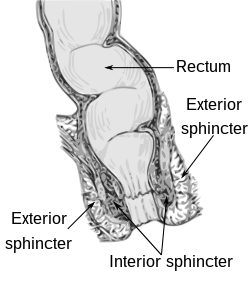
Sphincter, a must know term.

The sphincter is actually a muscle.
Called as sphincter muscle.
Image result for sphincter muscle

sphincter is a circular muscle that 
normally maintains constriction of a 
natural body passage or orifice and 
which relaxes as required by normal 
physiological functioning. Sphincters 
are found in many animals.

Human palm skin.

Human palm skin doesn't contain
melanin a skin pigment.
That's the reason for its fair colour.

[And to say a bit more elaborately,
These structures are made of 
keratin, a tough protein. Similar 
types of keratin also make up human 
hair, the scales and claws of reptiles, 
and the feathers, claws, and beaks of 
birds. The palm of the hand doesn't 
contain melanin (skin pigment) or 
hair follicles.]
- Google

Image result for palm skin

Monday, May 6, 2019

Satanic time

This time is of satanic or demonic trained people,
you see so much of mishappenings happening all around
is all because of demonic type people.

I have felt lately that demons do exist and the most
asurprising fact can be that they can even be in your
own family, maybe your dad, mom or can be their
children.


So the thing I want to conclude to is always be attentive 
for such people.