New ads.

Showing posts with label the. Show all posts

Tuesday, December 10, 2024

Who is Luigi Mangione: What to know about the ‘strong person of interest’ in shooting of UnitedHealthcare CEO Brian Thompson

Police followed a series of clues to identify and track down the suspect believed to have fatally shot UnitedHealthcare CEO Brian Thompson, according to the NYPD. On Monday, police responded to a tip from a McDonald’s employee in Altoona, Pennsylvania, who said they saw a man who looked like the person of interest police have been searching for. Mangione was eating in the McDonald’s when he was recognized by the employee, police said. The 26-year-old man was taken in for questioning, and it was discovered that he was in possession of a ghost gun that matches the weapon believed to have been used in the assassination-style killing, officials said at a press conference on Monday. The person of interest also had supresser for the gun and several fake identification cards, including a New Jersey ID that the NYPD believes was used by the gunman.
The person of interest was pictured in the back of a taxi (EPA) New York Mayor Eric Adams said that the man in custody matches the description of the person in the photos and that he possessed items connected to the killing. New York City Police Commissioner Jessica Tisch confirmed Mangione has been arrested on firearms charges. He is believed to be “our person of interest,” she told the press conference, and said it was down to a “combination of old-school detective work and new age technology” as well as the public that helped lead to the arrest.

Saturday, December 7, 2024

Melania Trump says heading to the White House for the second term is much different than the first

WASHINGTON (AP) — Soon-to-be first lady Melania Trump said Friday that preparing to enter the White House for the second time looks a lot different from the first go-around. Now, she and her husband know what to expect. “You know what you need to establish, you know what kind of people you need to hire for your office,” she said on “Fox & Friends” in a rare television appearance, where she showed off holiday ornaments she’s selling and her memoir as Christmas approaches. She said the pace has been fast, as Donald Trump works to build his administration: “It’s incredible and we are very, very busy.” She’s packing up so “we can start on Day 1.” She said her husband’s attitude after his 2024 win was not the same as when he won in 2016. “The country and the people really supported him,” she said. I think the energy is different. People around him are different.” The incoming first lady also praised her 18-year-old son Barron, crediting him with helping his father find new ways to reach the audience that elected him president. Trump has four other children. “He is a grown young man, I’m very proud of him about his knowledge, even about politics and giving advice to his father,” she said. “He brought in so many young people. He knows his generation.” She described working on her memoirs as a process that was “very personal and could be sometimes very joyful, but also traumatic and hard.”

Friday, December 6, 2024

The secret to our big brains might be in our gut

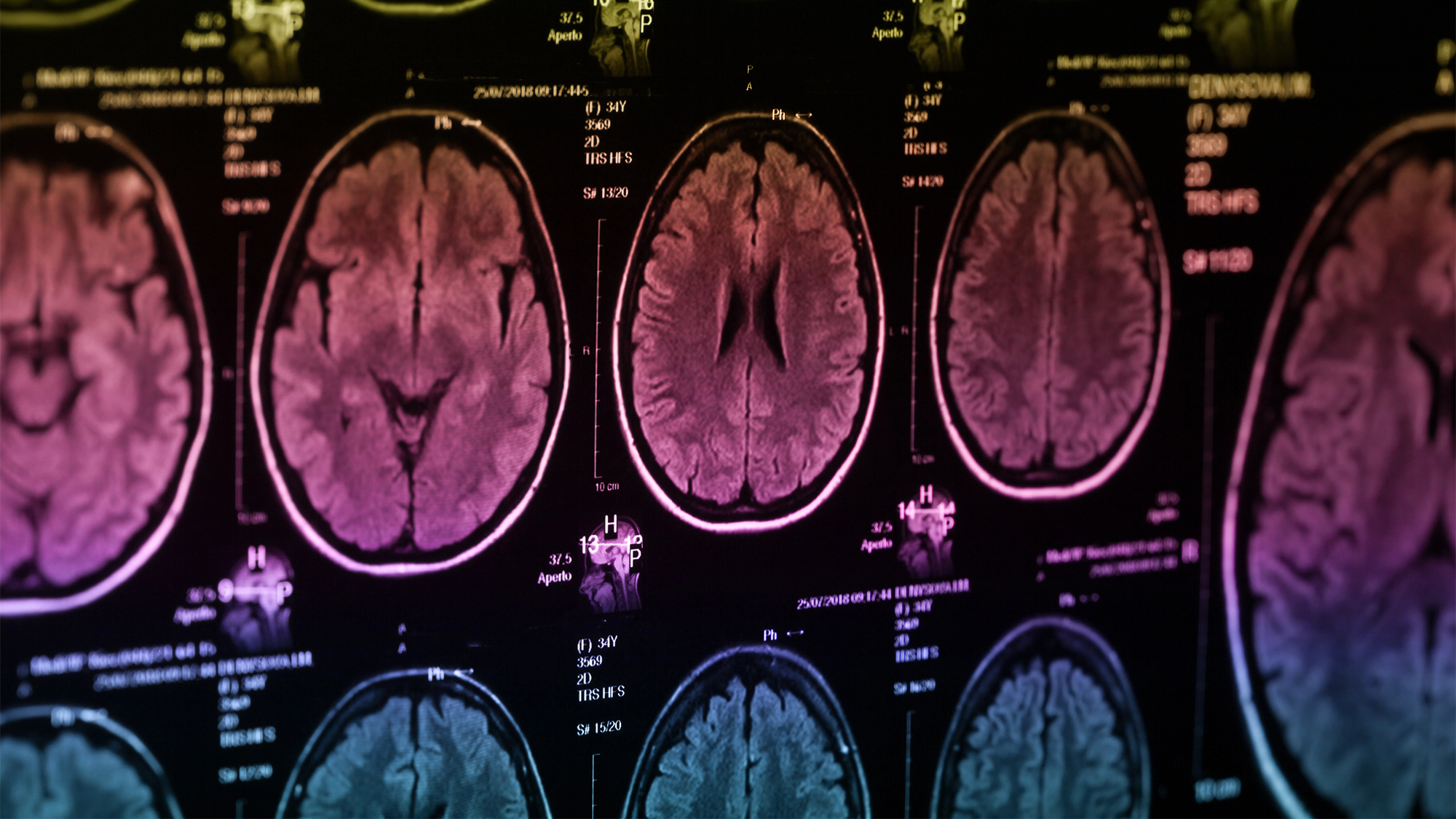
Brain tissue is among the most energetically costly in the body, and as a result, larger-brained mammals require more energy to support brain growth and maintenance. Exactly which biological changes allowed human ancestors to meet the very high needs for energy as they evolved larger brains has remained unclear. A new Northwestern University study points to the role of gut microbes, tiny living organisms in our digestive system that help break down food and produce energy.
In a controlled lab experiment, researchers implanted microbes from two large-brain primate species (human and squirrel monkey), and one small-brain primate species (macaque), into mice. Their findings showed the mice with microbes from large-brain primate species produced and used more energy, while those with microbes from the small-brain species stored more energy as fat. The data is the first to show gut microbes from different animal species shape variations in biology between animal species and supports the hypothesis that gut microbes might influence evolution by changing how an animal's body works. The study offers a new perspective on human evolution, particularly the evolution of our large brains. The findings will be published in the journal Microbial Genomics on Dec. 2. Prior studies have compared the influence of genes and the environment on primates with bigger and smallerbrains. However, there are very few studies comparing how different primates use energy. Even less information is available on how metabolism develops in different primate species. "We know the community of microbes living in the large intestine can produce compounds that affect aspects of human biology -- for example, causing changes to metabolism that can lead to insulin resistance and weight gain," said the study's first author Katherine Amato, associate professor of anthropology at Northwestern. "Variation in the gut microbiota is an unexplored mechanism in which primate metabolism could facilitate different brain-energetic requirements," Amato said. After introducing the gut microbes into microbe-free mice, the researchers measured changes in mouse physiology over time, glucose, liver function and other traits. They also measured differences in the types of microbes and the compounds they were producing in each group of mice. The researchers expected to find microbes from different primates would lead to differences in the biology of the mice inoculated with them. They also expected mice with human microbes to have the greatest difference in biology from mice with "While we did see that human-inoculated mice had some differences, the strongest pattern was the difference between large-brained primates (humans and squirrel monkeys) and smaller-brained primates (macaques)," Amato said. The mice given microbes from the humans and squirrel monkeys had similar biology, even though these two larger-brained primate species are not close evolutionary relatives of one another. This suggests something othermicrobes from the other two than shared ancestry -- likely their shared trait of large brains is driving the biological similarities seen in the mice inoculated with their microbes. "These findings suggest that when humans and squirrel monkeys both separately evolved larger brains, their microbial communities changed in similar ways to help provide the necessary energy," Amato said. In future studies, the researchers hope to run the experiment with microbes from additional primate species varying in brain size. They would also like to collect more information on the types of compounds the microbes are producing and gather additional data on the biological traits of the hosts such as immune function and behavior.species.including weight gain, fat percentage, fasting

Thursday, December 5, 2024

The United States is paralyzed...and it's not going to get any better

The United States is paralyzed...and it's not going to get any better The “Lake Effect” phenomenon is currently sweeping across the northeastern United States. The "Lake Effect" has resulted in an exceptional snowstorm, paralyzing part of the country, including Ohio, Michigan, Pennsylvania and New York - all regions bordering the Great Lakes. As reported by 20 Minutes, the “Lake Effect” occurs when cold winds cross the relatively warm waters of the Great Lakes. Air masses are created that capture the moisture in the lakes, which then condenses into snow when they hit the cold lands downstream. The amount of snowfall, mostly concentrated in narrow but intense bands, then increases sharply. Exceptional snowfalls Because temperatures on the Great Lakes are currently higher than the seasonal average, the meteorological phenomenon gains in energy and power, leading to substantial snowfalls. In some regions, snowfalls have reached 90 centimetres, and could even reach 2 metres by the end of the week. The consequences? Freeways are at a standstill, forcing drivers to spend the night in their cars or seek refuge in service stations. Heavy goods vehicles are also banned from certain main roads. What about the future? In the future, climate change could have a major impact on both the frequency and intensity of snowstorms associated with the lake effect. Shorter winters and longer periods of ice could help intensify the phenomenon. In the long term, if temperatures continue to rise, the snow could turn to rain, threatening the regions concerned with major flooding. Until the end of the week, and according to weather forecasts, snowfalls and strong winds are expected to continue to hit this part of the United States.

Saturday, November 30, 2024

p says Mexico's president promised to close the border. She begs to differ.

In what looks like a case of “he said, she said,” President-elect Donald Trump and Mexican President Claudia Sheinbaum appear to have starkly different recollections of a conversation that covered the hot-button issue of migration. After the phone chat late Wednesday, Trump wrote on social media that the Mexican leader had agreed to stop immigration through Mexico and to the United States. “Just had a wonderful conversation with the new President of Mexico, Claudia Sheinbaum Pardo. She has agreed to stop Migration through Mexico, and into the United States, effectively closing our Southern Border,” he said in a post on Truth Social. “It was a very productive conversation!” Sheinbaum’s account differed from Trump’s. “In our conversation with President Trump, I explained to him the comprehensive strategy that Mexico has followed to address the migration phenomenon, respecting human rights,” she said on X. “We reiterate that Mexico’s position is not to close borders but instead build bridges between government and people.” Earlier, Sheinbaum said she’d had an “excellent conversation with President Donald Trump.” “I shared with him that caravans weren’t arriving at the northern border because they are being served in Mexico,” she said in the post, referring the large groups of migrants traveling together in hopes of reaching the U.S.

Saturday, July 11, 2020

The best (and worst) materials for masks

The best (and worst) materials for masks

It's intuitive and scientifically shown that wearing a face covering can help reduce the spread of the novel coronavirus that causes COVID-19. But not all masks are created equal, according to new University of Arizona-led research.
Amanda Wilson, an environmental health sciences doctoral candidate in the Department of Community, Environment and Policy in the Mel and Enid Zuckerman College of Public Health, is lead author on a recent study published in the Journal of Hospital Infection that assessed the ability of a variety of nontraditional mask materials to protect a person from infection after 30 seconds and after 20 minutes of exposure in a highly contaminated environment.
When the researchers compared wearing masks to wearing no protection during 20-minute and 30-second exposures to the virus, they found that infection risks were reduced by 24-94% or by 44-99% depending on the mask and exposure duration. Risk reduction decreased as exposure duration increased, they found.
"N99 masks, which are even more efficient at filtering airborne particles than N95 masks, are obviously one of the best options for blocking the virus, as they can reduce average risk by 94-99% for 20-minute and 30-second exposures, but they can be hard to come by, and there are ethical considerations such as leaving those available for medical professionals," Wilson said.
The next best options, according to the research, are N95 and surgical masks and, perhaps surprisingly, vacuum cleaner filters, which can be inserted into filter pockets in cloth masks. The vacuum filters reduced infection risk by 83% for a 30-second exposure and 58% for a 20-minute exposure. Of the other nontraditional materials evaluated by the researchers, tea towels, cotton-blend fabrics and antimicrobial pillowcases were the next best for protection.
Scarves, which reduced infection risk by 44% after 30 seconds and 24% after 20 minutes, and similarly effective cotton t-shirts are only slightly better than wearing no mask at all, they found.
"We knew that masks work, but we wanted to know how well and compare different materials' effects on health outcomes," said Wilson, who specializes in quantitative microbial risk assessment.
Wilson and her team collected data from various studies of mask efficacy and created a computer model to simulate infection risk, taking various factors into consideration.
"One big component of risk is how long you're exposed. We compared risk of infection at both 30 seconds and 20 minutes in a highly contaminated environment," she said.
Other conditions that impact risk of infection are the number of people around you and their distance from you, she said.
The size of virus-transporting droplets from sneezes, coughs or even speech is also a very important factor. Larger, heavier droplets carrying the virus drop out of the air faster than smaller, lighter ones. That's one reason distance helps reduce exposure.
"Aerosol size can also be affected by humidity," Wilson said. "If the air is drier, then aerosols become smaller faster. If humidity is higher, then aerosols will stay larger for a longer period of time, dropping out faster. That might sound good at first, but then those aerosols fall on surfaces, and that object becomes another potential exposure route."
The study also showed that the more time a person spends in an environment where the virus is present, the less effective a mask becomes.
"That doesn't mean take your mask off after 20 minutes," Wilson said, "but it does mean that a mask can't reduce your risk to zero. Don't go to a bar for four hours and think you're risk free because you're wearing a mask. Stay home as much as possible, wash your hands often, wear a mask when you're out and don't touch your face."
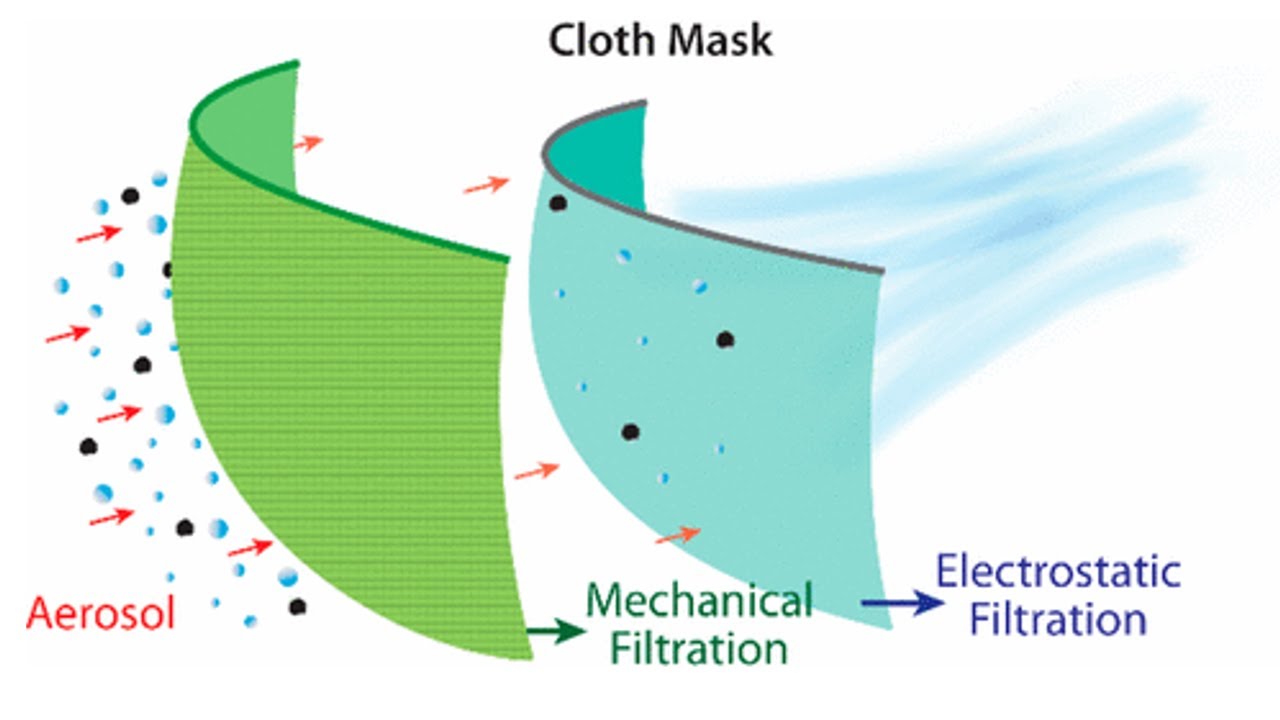
Masks protect the wearer and others in a number of different ways. Wilson said there are two "intuitive ways" that masks filter larger aerosols: mechanical interception and inertial impaction.
"The denser the fibers of a material, the better it is at filtering. That's why higher thread counts lead to higher efficacy. There's just more to block the virus," she said. "But some masks (such as those made from silk) also have electrostatic properties, which can attract smaller particles and keep them from passing through the mask as well."
The model developed by Wilson and her colleagues included parameters such as inhalation rate -- the volume of air inhaled over time -- and virus concentration in the air.
"We took a lot of research data, put it into a mathematical model and related those data points to each other," Wilson said. "For example, if we know people's inhalation rates vary by this much and know this much virus is in the air and these materials offer this much efficiency in terms of filtration, what does that mean for infection risk? We provide a range, in part, because everyone is different, such as in how much air we breathe over time."
Wilson also said it's important for a mask to have a good seal that pinches at nose, and she noted that people shouldn't wear a mask beneath the nose or tuck it under the chin when not in use.
"Proper use of masks is so important," Wilson said. "Also, we were focusing on masks protecting the wearer, but they're most important to protect others around you if you're infected. If you put less virus out into the air, you're creating a less contaminated environment around you. As our model shows, the amount of infectious virus you're exposed to has a big impact on your infection risk and the potential for others' masks to protect them as well."

Story Source:
Materials provided by University of Arizona. Original written by Mikayla Mace. Note: Content may be edited for style and length.

Journal Reference:
  1. Amanda M. Wilson, Sarah E. Abney, Marco-Felipe King, Mark H. Weir, Martín López-García, Jonathan D. Sexton, Stephanie J. Dancer, Jessica Proctor, Catherine J. Noakes, Kelly A. Reynolds. COVID-19 and non-traditional mask use: How do various materials compare in reducing the infection risk for mask wearers? Journal of Hospital Infection, 2020; DOI: 10.1016/j.jhin.2020.05.036


Boy or girl? It's in the father's genes

Boy or girl? It's in the father's genes

A Newcastle University study involving thousands of families is helping prospective parents work out whether they are likely to have sons or daughters.
The work by Corry Gellatly, a research scientist at the university, has shown that men inherit a tendency to have more sons or more daughters from their parents. This means that a man with many brothers is more likely to have sons, while a man with many sisters is more likely to have daughters.
The research involved a study of 927 family trees containing information on 556,387 people from North America and Europe going back to 1600.
"The family tree study showed that whether you’re likely to have a boy or a girl is inherited. We now know that men are more likely to have sons if they have more brothers but are more likely to have daughters if they have more sisters. However, in women, you just can’t predict it," Mr Gellatly explains.
Men determine the sex of a baby depending on whether their sperm is carrying an X or Y chromosome. An X chromosome combines with the mother’s X chromosome to make a baby girl (XX) and a Y chromosome will combine with the mother’s to make a boy (XY).
The Newcastle University study suggests that an as-yet undiscovered gene controls whether a man’s sperm contains more X or more Y chromosomes, which affects the sex of his children. On a larger scale, the number of men with more X sperm compared to the number of men with more Y sperm affects the sex ratio of children born each year.
Sons or daughters?
A gene consists of two parts, known as alleles, one inherited from each parent. In his paper, Mr Gellatly demonstrates that it is likely men carry two different types of allele, which results in three possible combinations in a gene that controls the ratio of X and Y sperm;
  • Men with the first combination, known as mm, produce more Y sperm and have more sons.
  • The second, known as mf, produce a roughly equal number of X and Y sperm and have an approximately equal number of sons and daughters.
  • The third, known as ff produce more X sperm and have more daughters.
“The gene that is passed on from both parents, which causes some men to have more sons and some to have more daughters, may explain why we see the number of men and women roughly balanced in a population. If there are too many males in the population, for example, females will more easily find a mate, so men who have more daughters will pass on more of their genes, causing more females to be born in later generations,” says Newcastle University researcher Mr Gellatly.
More boys born after the wars
In many of the countries that fought in the World Wars, there was a sudden increase in the number of boys born afterwards. The year after World War I ended, an extra two boys were born for every 100 girls in the UK, compared to the year before the war started. The gene, which Mr Gellatly has described in his research, could explain why this happened.
As the odds were in favour of men with more sons seeing a son return from the war, those sons were more likely to father boys themselves because they inherited that tendency from their fathers. In contrast, men with more daughters may have lost their only sons in the war and those sons would have been more likely to father girls. This would explain why the men that survived the war were more likely to have male children, which resulted in the boy-baby boom.
In most countries, for as long as records have been kept, more boys than girls have been born. In the UK and US, for example, there are currently about 105 males born for every 100 females.
It is well-documented that more males die in childhood and before they are old enough to have children. So in the same way that the gene may cause more boys to be born after wars, it may also cause more boys to be born each year.
How does the gene work?
The trees (above) illustrate how the gene works. It is a simplified example, in which men either have only sons, only daughters, or equal numbers of each, though in reality it is less clear cut. It shows that although the gene has no effect in females, they also carry the gene and pass it to their children.
In the first family tree (A) the grandfather is mm, so all his children are male. He only passes on the m allele, so his children are more likely to have the mm combination of alleles themselves. As a result, those sons may also have only sons (as shown). The grandsons have the mf combination of alleles, because they inherited an m from their father and an f from their mother. As a result, they have an equal number of sons and daughters (the great grandchildren).
In the second tree (B) the grandfather is ff, so all his children are female, they have the ff combination of alleles because their father and mother were both ff. One of the female children has her own children with a male who has the mm combination of alleles. That male determines the sex of the children, so the grandchildren are all male. The grandsons have the mf combination of alleles, because they inherited an m from their father and f from their mother. As a result, they have an equal number of sons and daughters (the great-grandchildren).

Story Source:
Materials provided by Newcastle UniversityNote: Content may be edited for style and length.

Journal Reference:
  1. Gellatly et al. Trends in Population Sex Ratios May be Explained by Changes in the Frequencies of Polymorphic Alleles of a Sex Ratio GeneEvolutionary Biology, Dec 11, 2008; DOI: 10.1007/s11692-008-9046-3

The best material for homemade face masks may be a combination of two fabrics

The best material for homemade face masks

In the wake of the COVID-19 pandemic, the U.S. Centers for Disease Control and Prevention recommends that people wear masks in public. Because N95 and surgical masks are scarce and should be reserved for health care workers, many people are making their own coverings. Now, researchers report in ACS Nano that a combination of cotton with natural silk or chiffon can effectively filter out aerosol particles -- if the fit is good.
SARS-CoV-2, the new coronavirus that causes COVID-19, is thought to spread mainly through respiratory droplets when an infected person coughs, sneezes, speaks or breathes. These droplets form in a wide range of sizes, but the tiniest ones, called aerosols, can easily slip through the openings between certain cloth fibers, leading some people to question whether cloth masks can actually help prevent disease. Therefore, Supratik Guha at the University of Chicago and colleagues wanted to study the ability of common fabrics, alone or in combination, to filter out aerosols similar in size to respiratory droplets.
The researchers used an aerosol mixing chamber to produce particles ranging from 10 nm to 6 μm in diameter. A fan blew the aerosol across various cloth samples at an airflow rate corresponding to a person's respiration at rest, and the team measured the number and size of particles in air before and after passing through the fabric. One layer of a tightly woven cotton sheet combined with two layers of polyester-spandex chiffon -- a sheer fabric often used in evening gowns -- filtered out the most aerosol particles (80-99%, depending on particle size), with performance close to that of an N95 mask material. Substituting the chiffon with natural silk or flannel, or simply using a cotton quilt with cotton-polyester batting, produced similar results. The researchers point out that tightly woven fabrics, such as cotton, can act as a mechanical barrier to particles, whereas fabrics that hold a static charge, like certain types of chiffon and natural silk, serve as an electrostatic barrier. However, a 1% gap reduced the filtering efficiency of all masks by half or more, emphasizing the importance of a properly fitted mask.
The authors acknowledge use of the U.S. Department of Energy's Center for Nanoscale Materials user facility at Argonne National Laboratory and funding from the U.S. Department of Defense's Vannevar Bush Fellowship.

Story Source:
Materials provided by American Chemical SocietyNote: Content may be edited for style and length.

Journal Reference:
  1. Abhiteja Konda, Abhinav Prakash, Gregory A. Moss, Michael Schmoldt, Gregory D. Grant, Supratik Guha. Aerosol Filtration Efficiency of Common Fabrics Used in Respiratory Cloth MasksACS Nano, 2020; DOI: 10.1021/acsnano.0c03252

Wednesday, May 20, 2020

Potentially fatal combinations of humidity and heat are emerging across the globe

High temperature on thermometer (stock image). | Credit: © nnudoo / stock.adobe.com
High temperature on thermometer (stock image).

Most everyone knows that humid heat is harder to handle than the "dry" kind. And recently, some scientists have projected that later in the century, in parts of the tropics and subtropics, warming climate could cause combined heat and humidity to reach levels rarely if ever experienced before by humans. Such conditions would ravage economies, and possibly even surpass the physiological limits of human survival.
According to a new study, the projections are wrong: such conditions are already appearing. The study identifies thousands of previously rare or unprecedented bouts of extreme heat and humidity in Asia, Africa, Australia, South America and North America, including in the U.S. Gulf Coast region. Along the Persian Gulf, researchers spotted more than a dozen recent brief outbreaks surpassing the theoretical human survivability limit. The outbreaks have so far been confined to localized areas and lasted just hours, but they are increasing in frequency and intensity, say the authors. The study appears this week in the journal Science Advances.
"Previous studies projected that this would happen several decades from now, but this shows it's happening right now," said lead author Colin Raymond, who did the research as a PhD. student at Columbia University's Lamont-Doherty Earth Observatory. "The times these events last will increase, and the areas they affect will grow in direct correlation with global warming."
Analyzing data from weather stations from 1979 to 2017, the authors found that extreme heat/humidity combinations doubled over the study period. Repeated incidents appeared in much of India, Bangladesh and Pakistan; northwestern Australia; and along the coasts of the Red Sea and Mexico's Gulf of California. The highest, potentially fatal, readings, were spotted 14 times in the cities of Dhahran/Damman, Saudi Arabia; Doha, Qatar; and Ras Al Khaimah, United Arab Emirates, which have combined populations of over 3 million. Parts of southeast Asia, southern China, subtropical Africa and the Caribbean were also hit.
The southeastern United States saw extreme conditions dozens of times, mainly near the Gulf Coast in east Texas, Louisiana, Mississippi, Alabama and the Florida Panhandle. The worst spots: New Orleans and Biloxi, Miss. Such conditions also reached inland into Arkansas and along the southeastern coastal plain.
Not surprisingly, incidents tended to cluster on coastlines along confined seas, gulfs and straits, where evaporating seawater provides abundant moisture to be sucked up by hot air. In some areas further inland, moisture-laden monsoon winds or wide areas of crop irrigation appear to play the same role.
Prior climate studies failed to recognize most past incidents because climate researchers usually look at averages of heat and humidity measured over large areas and over several hours at a time. Raymond and his colleagues instead drilled directly into hourly data from 7,877 individual weather stations, allowing them to pinpoint shorter-lived bouts affecting smaller areas.
Humidity worsens the effects of heat because humans cool their bodies by sweating; water expelled through the skin removes excess body heat, and when it evaporates, it carries that heat away. The process works nicely in deserts, but less well in humid regions, where the air is already too laden with moisture to take on much more. Evaporation of sweat slows. In the most extreme instances, it could stop. In that case, unless one can retreat to an air-conditioned room, the body's core heats beyond its narrow survivable range, and organs begin to fail. Even a strong, physically fit person resting in the shade with no clothes and unlimited access to drinking water would die within hours.
Meteorologists measure the heat/humidity effect on the so-called "wet bulb" Centigrade scale; in the United States, these readings are often translated into "heat index" or "real-feel" Fahrenheit readings. Prior studies suggest that even the strongest, best-adapted people cannot carry out normal outdoor activities when the wet bulb hits 32 C, equivalent to a heat index of 132 F. Most others would crumble well before that. A reading of 35 -- the peak briefly reached in the Persian Gulf cities -- is considered the theoretical survivability limit. That translates roughly to a heat index of 160 F. (The heat index actually ends at 127 F, so these readings are literally off the charts.) "It's hard to exaggerate the effects of anything that gets into the 30s," said Raymond.
The study found that worldwide, wet-bulb readings approaching or exceeding 30C on the wet bulb have doubled since 1979. The number of readings of 31 -- previously believed to occur only rarely -- totaled around 1,000. Readings of 33 -- previously thought to be almost nonexistent -- totaled around 80.
A heat wave that struck much of the United States last July maxed out at about 30C on the wet bulb, translating into heat indexes approaching 115 F in places; the highest was 122 F, in Baltimore, Md., and a similar wave hit in August. The waves paralyzed communities and led to at least a half-dozen deaths, including those of an air-conditioning technician in Phoenix, Az., and former National Football League lineman Mitch Petrus, who died in Arkansas while working outside.
It was a modest toll; heat-related illnesses already kill more U.S. residents than any other weather-related hazard including cold, hurricanes or floods. An investigation last year by the website InsideClimate News revealed that cases of heat stroke or heat exhaustion among U.S. troops on domestic bases grew 60 percent from 2008 to 2018. Seventeen soldiers died, almost all in the muggy U.S. Southeast. High-humidity heat waves in Russia and Europe, where far fewer people have air conditioning, have killed tens of thousands.
"We may be closer to a real tipping point on this than we think," said Radley Horton, a Lamont-Doherty research scientist and coauthor of the paper. Horton coauthored a 2017 paper projecting that such conditions would not take hold until later in the century.
While air conditioning may blunt the effects in the United States and some other wealthy countries, there are limits. Before the new study, one of the previously highest heat/humidity events ever reported was in the Iranian city of Bandar Mahshahr, which almost reached a 35C wet-bulb reading on July 31, 2015. There were no known deaths; residents reported staying inside air-conditioned vehicles and buildings, and showering after brief sojourns outside. But Horton points out that if people are increasingly forced indoors for longer periods, farming, commerce and other activities could potentially grind to a halt, even in rich nations-a lesson already brought home by the collapse of economies in the face of the novel coronavirus.
In any case, many people in the poorer countries most at risk do not have electricity, never mind air conditioning. There, many rely on subsistence farming requiring daily outdoor heavy labor. These facts could make some of the most affected areas basically uninhabitable, says Horton.
Kristina Dahl, a climatologist at the Union of Concerned Scientists who led a study last year warning of increasing future heat and humidity in the United States, said the new paper shows "how close communities around the world are to the limits." She added that some localities may already be seeing conditions worse than the study suggests, because weather stations do not necessarily pick up hot spots in dense city neighborhoods built with heat-trapping concrete and pavement.
Steven Sherwood, a climatologist at the Australia's University of New South Wales, said, "These measurements imply that some areas of Earth are much closer than expected to attaining sustained intolerable heat. It was previously believed we had a much larger margin of safety."
The study was coauthored by Tom Matthews, a lecturer in climate science at Loughborough University in the United Kingdom. Colin Raymond is now a postdoctoral researcher at NASA's Jet Propulsion Laboratory.

Story Source:
Materials provided by Earth Institute at Columbia University. Original written by Kevin Krajick. Note: Content may be edited for style and length.

Journal Reference:
  1. Colin Raymond, Tom Matthews, Radley M. Horton. The emergence of heat and humidity too severe for human toleranceScience Advances, 2020; 6 (19): eaaw1838 DOI: 10.1126/sciadv.aaw1838

Monday, May 18, 2020

Potentially fatal combinations of humidity and heat are emerging across the globe

Potentially fatal combinations of humidity and heat are emerging across the globe


Most everyone knows that humid heat is harder to handle than the "dry" kind. And recently, some scientists have projected that later in the century, in parts of the tropics and subtropics, warming climate could cause combined heat and humidity to reach levels rarely if ever experienced before by humans. Such conditions would ravage economies, and possibly even surpass the physiological limits of human survival.
According to a new study, the projections are wrong: such conditions are already appearing. The study identifies thousands of previously rare or unprecedented bouts of extreme heat and humidity in Asia, Africa, Australia, South America and North America, including in the U.S. Gulf Coast region. Along the Persian Gulf, researchers spotted more than a dozen recent brief outbreaks surpassing the theoretical human survivability limit. The outbreaks have so far been confined to localized areas and lasted just hours, but they are increasing in frequency and intensity, say the authors. The study appears this week in the journal Science Advances.
"Previous studies projected that this would happen several decades from now, but this shows it's happening right now," said lead author Colin Raymond, who did the research as a PhD. student at Columbia University's Lamont-Doherty Earth Observatory. "The times these events last will increase, and the areas they affect will grow in direct correlation with global warming."
Analyzing data from weather stations from 1979 to 2017, the authors found that extreme heat/humidity combinations doubled over the study period. Repeated incidents appeared in much of India, Bangladesh and Pakistan; northwestern Australia; and along the coasts of the Red Sea and Mexico's Gulf of California. The highest, potentially fatal, readings, were spotted 14 times in the cities of Dhahran/Damman, Saudi Arabia; Doha, Qatar; and Ras Al Khaimah, United Arab Emirates, which have combined populations of over 3 million. Parts of southeast Asia, southern China, subtropical Africa and the Caribbean were also hit.
The southeastern United States saw extreme conditions dozens of times, mainly near the Gulf Coast in east Texas, Louisiana, Mississippi, Alabama and the Florida Panhandle. The worst spots: New Orleans and Biloxi, Miss. Such conditions also reached inland into Arkansas and along the southeastern coastal plain.
Not surprisingly, incidents tended to cluster on coastlines along confined seas, gulfs and straits, where evaporating seawater provides abundant moisture to be sucked up by hot air. In some areas further inland, moisture-laden monsoon winds or wide areas of crop irrigation appear to play the same role.
Prior climate studies failed to recognize most past incidents because climate researchers usually look at averages of heat and humidity measured over large areas and over several hours at a time. Raymond and his colleagues instead drilled directly into hourly data from 7,877 individual weather stations, allowing them to pinpoint shorter-lived bouts affecting smaller areas.
Humidity worsens the effects of heat because humans cool their bodies by sweating; water expelled through the skin removes excess body heat, and when it evaporates, it carries that heat away. The process works nicely in deserts, but less well in humid regions, where the air is already too laden with moisture to take on much more. Evaporation of sweat slows. In the most extreme instances, it could stop. In that case, unless one can retreat to an air-conditioned room, the body's core heats beyond its narrow survivable range, and organs begin to fail. Even a strong, physically fit person resting in the shade with no clothes and unlimited access to drinking water would die within hours.
Meteorologists measure the heat/humidity effect on the so-called "wet bulb" Centigrade scale; in the United States, these readings are often translated into "heat index" or "real-feel" Fahrenheit readings. Prior studies suggest that even the strongest, best-adapted people cannot carry out normal outdoor activities when the wet bulb hits 32 C, equivalent to a heat index of 132 F. Most others would crumble well before that. A reading of 35 -- the peak briefly reached in the Persian Gulf cities -- is considered the theoretical survivability limit. That translates roughly to a heat index of 160 F. (The heat index actually ends at 127 F, so these readings are literally off the charts.) "It's hard to exaggerate the effects of anything that gets into the 30s," said Raymond.
The study found that worldwide, wet-bulb readings approaching or exceeding 30C on the wet bulb have doubled since 1979. The number of readings of 31 -- previously believed to occur only rarely -- totaled around 1,000. Readings of 33 -- previously thought to be almost nonexistent -- totaled around 80.
A heat wave that struck much of the United States last July maxed out at about 30C on the wet bulb, translating into heat indexes approaching 115 F in places; the highest was 122 F, in Baltimore, Md., and a similar wave hit in August. The waves paralyzed communities and led to at least a half-dozen deaths, including those of an air-conditioning technician in Phoenix, Az., and former National Football League lineman Mitch Petrus, who died in Arkansas while working outside.
It was a modest toll; heat-related illnesses already kill more U.S. residents than any other weather-related hazard including cold, hurricanes or floods. An investigation last year by the website InsideClimate News revealed that cases of heat stroke or heat exhaustion among U.S. troops on domestic bases grew 60 percent from 2008 to 2018. Seventeen soldiers died, almost all in the muggy U.S. Southeast. High-humidity heat waves in Russia and Europe, where far fewer people have air conditioning, have killed tens of thousands.
"We may be closer to a real tipping point on this than we think," said Radley Horton, a Lamont-Doherty research scientist and coauthor of the paper. Horton coauthored a 2017 paper projecting that such conditions would not take hold until later in the century.
While air conditioning may blunt the effects in the United States and some other wealthy countries, there are limits. Before the new study, one of the previously highest heat/humidity events ever reported was in the Iranian city of Bandar Mahshahr, which almost reached a 35C wet-bulb reading on July 31, 2015. There were no known deaths; residents reported staying inside air-conditioned vehicles and buildings, and showering after brief sojourns outside. But Horton points out that if people are increasingly forced indoors for longer periods, farming, commerce and other activities could potentially grind to a halt, even in rich nations-a lesson already brought home by the collapse of economies in the face of the novel coronavirus.
In any case, many people in the poorer countries most at risk do not have electricity, never mind air conditioning. There, many rely on subsistence farming requiring daily outdoor heavy labor. These facts could make some of the most affected areas basically uninhabitable, says Horton.
Kristina Dahl, a climatologist at the Union of Concerned Scientists who led a study last year warning of increasing future heat and humidity in the United States, said the new paper shows "how close communities around the world are to the limits." She added that some localities may already be seeing conditions worse than the study suggests, because weather stations do not necessarily pick up hot spots in dense city neighborhoods built with heat-trapping concrete and pavement.
Steven Sherwood, a climatologist at the Australia's University of New South Wales, said, "These measurements imply that some areas of Earth are much closer than expected to attaining sustained intolerable heat. It was previously believed we had a much larger margin of safety."
The study was coauthored by Tom Matthews, a lecturer in climate science at Loughborough University in the United Kingdom. Colin Raymond is now a postdoctoral researcher at NASA's Jet Propulsion Laboratory.

Potentially fatal combinations of humidity and heat are emerging across the globe


Monday, April 13, 2020

Synchrotron X-ray sheds light on some of the world's oldest dinosaur eggs

Synchrotron X-ray sheds light on some of the world's oldest dinosaur eggs


An international team of scientists led by the University of the Witwatersrand in South Africa, has been able to reconstruct, in the smallest details, the skulls of some of the world's oldest known dinosaur embryos in 3D, using powerful and non-destructive synchrotron techniques at the ESRF, the European Synchrotron in France. They found that the skulls develop in the same order as those of today's crocodiles, chickens, turtles and lizards. The findings are published today in Scientific Reports.

University of the Witwatersrand scientists publish 3D reconstructions of the ~2cm-long skulls of some of the world's oldest dinosaur embryos in an article in Scientific Reports. The embryos, found in 1976 in Golden Gate Highlands National Park (Free State Province, South Africa) belong to South Africa's iconic dinosaur Massospondylus carinatus, a 5-meter long herbivore that nested in the Free State region 200 million years ago.
The scientific usefulness of the embryos was previously limited by their extremely fragile nature and tiny size. In 2015, scientists Kimi Chapelle and Jonah Choiniere, from the University of Witwatersrand, brought them to the European Synchrotron (ESRF) in Grenoble, France for scanning. At the ESRF, an 844 metre-ring of electrons travelling at the speed of light emits high-powered X-ray beams that can be used to non-destructively scan matter, including fossils. The embryos were scanned at an unprecedented level of detail -- at the resolution of an individual bone cell. With these data in hand, and after nearly 3 years of data processing at Wits' laboratory, the team was able to reconstruct a 3D model of the baby dinosaur skull. "No lab CT scanner in the world can generate these kinds of data," said Vincent Fernandez, one of the co-authors and scientist at the Natural History Museum in London (UK). "Only with a huge facility like the ESRF can we unlock the hidden potential of our most exciting fossils. This research is a great example of a global collaboration between Europe and the South African National Research Foundation," he adds.
Up until now, it was believed that the embryos in those eggs had died just before hatching. However, during the study, lead author Chapelle noticed similarities with the developing embryos of living dinosaur relatives (crocodiles, chickens, turtles, and lizards). By comparing which bones of the skull were present at different stages of their embryonic development, Chapelle and co-authors can now show that the Massospondylus embryos were actually much younger than previously thought and were only at 60% through their incubation period.
The team also found that each embryo had two types of teeth preserved in its developing jaws. One set was made up of very simple triangular teeth that would have been resorbed or shed before hatching, just like geckos and crocodiles today. The second set were very similar to those of adults, and would be the ones that the embryos hatched with. "I was really surprised to find that these embryos not only had teeth, but had two types of teeth. The teeth are so tiny; they range from 0.4 to 0.7mm wide. That's smaller than the tip of a toothpick!," explains Chapelle.
The conclusion of this research is that dinosaurs developed in the egg just like their reptilian relatives, whose embryonic developmental pattern hasn't changed in 200 million years. "It's incredible that in more than 250 million years of reptile evolution, the way the skull develops in the egg remains more or less the same. Goes to show -- you don't mess with a good thing!," concludes Jonah Choiniere, professor at the University of Witwatersrand and also co-author of the study.
The team hopes to apply their method to other dinosaur embryos to estimate their level of development. They will be looking at the rest of the skeleton of the Massospondylus embryos to see if it also shares similarities in development with today's dinosaur relatives. The arms and legs of the Massospondylus embryos have already been used to show that hatchlings likely walked on two legs.

Wednesday, March 11, 2020

Why is there any matter in the universe at all? New study sheds light

Subatomic particles abstract illustration (stock image). | Credit: © Peter Jurik / stock.adobe.com
Subatomic particles abstract illustration (stock image).

Scientists at the University of Sussex have measured a property of the neutron -- a fundamental particle in the universe -- more precisely than ever before. Their research is part of an investigation into why there is matter left over in the universe, that is, why all the antimatter created in the Big Bang didn't just cancel out the matter.
The team -- which included the Science and Technology Facilities Council's (STFC) Rutherford Appleton Laboratory in the UK, the Paul Scherrer Institute (PSI) in Switzerland, and a number of other institutions -- was looking into whether or not the neutron acts like an "electric compass." Neutrons are believed to be slightly asymmetrical in shape, being slightly positive at one end and slightly negative at the other -- a bit like the electrical equivalent of a bar magnet. This is the so-called "electric dipole moment" (EDM), and is what the team was looking for.
This is an important piece of the puzzle in the mystery of why matter remains in the Universe, because scientific theories about why there is matter left over also predict that neutrons have the "electric compass" property, to a greater or lesser extent. Measuring it then it helps scientists to get closer to the truth about why matter remains.
The team of physicists found that the neutron has a significantly smaller EDM than predicted by various theories about why matter remains in the universe; this makes these theories less likely to be correct, so they have to be altered, or new theories found. In fact it's been said in the literature that over the years, these EDM measurements, considered as a set, have probably disproved more theories than any other experiment in the history of physics. The results are reported today, Friday 28 February 2020, in the journal Physical Review Letters.
Professor Philip Harris, Head of the School of Mathematical and Physical Sciences and leader of the EDM group at the University of Sussex, said:
"After more than two decades of work by researchers at the University of Sussex and elsewhere, a final result has emerged from an experiment designed to address one of the most profound problems in cosmology for the last fifty years: namely, the question of why the Universe contains so much more matter than antimatter, and, indeed, why it now contains any matter at all. Why didn't the antimatter cancel out all the matter? Why is there any matter left?
"The answer relates to a structural asymmetry that should appear in fundamental particles like neutrons. This is what we've been looking for. We've found that the "electric dipole moment" is smaller than previously believed. This helps us to rule out theories about why there is matter left over -- because the theories governing the two things are linked.
"We have set a new international standard for the sensitivity of this experiment. What we're searching for in the neutron -- the asymmetry which shows that it is positive at one end and negative at the other -- is incredibly tiny. Our experiment was able to measure this in such detail that if the asymmetry could be scaled up to the size of a football, then a football scaled up by the same amount would fill the visible Universe."
The experiment is an upgraded version of apparatus originally designed by researchers at the University of Sussex and the Rutherford Appleton Laboratory (RAL), and which has held the world sensitivity record continuously from 1999 until now.
Dr Maurits van der Grinten, from the neutron EDM group at the Rutherford Appleton Laboratory (RAL), said:
"The experiment combines various state of the art technologies that all need to perform simultaneously. We're pleased that the equipment, technology and expertise developed by scientists from RAL has contributed to the work to push the limit on this important parameter"
Dr Clark Griffith, Lecturer in Physics from the School of Mathematical and Physical Sciences at the University of Sussex, said:
"This experiment brings together techniques from atomic and low energy nuclear physics, including laser-based optical magnetometry and quantum-spin manipulation. By using these multi-disciplinary tools to measure the properties of the neutron extremely precisely, we are able to probe questions relevant to high-energy particle physics and the fundamental nature of the symmetries underlying the universe. "
50,000 measurements
Any electric dipole moment that a neutron may have is tiny, and so is extremely difficult to measure. Previous measurements by other researchers have borne this out. In particular, the team had to go to great lengths to keep the local magnetic field very constant during their latest measurement. For example, every truck that drove by on the road next to the institute disturbed the magnetic field on a scale that would have been significant for the experiment, so this effect had to be compensated for during the measurement.
Also, the number of neutrons observed needed to be large enough to provide a chance to measure the electric dipole moment. The measurements ran over a period of two years. So-called ultracold neutrons, that is, neutrons with a comparatively slow speed, were measured. Every 300 seconds, a bunch of more than 10,000 neutrons was directed to the experiment and examined in detail. The researchers measured a total of 50,000 such bunches.
A new international standard is set
The researchers' latest results supported and enhanced those of their predecessors: a new international standard has been set. The size of the EDM is still too small to measure with the instruments that have been used up until now, so some theories that attempted to explain the excess of matter have become less likely. The mystery therefore remains, for the time being.
The next, more precise, measurement is already being constructed at PSI. The PSI collaboration expects to start their next series of measurements by 2021.
Search for "new physics"
The new result was determined by a group of researchers at 18 institutes and universities in Europe and the USA on the basis of data collected at PSI's ultracold neutron source. The researchers collected measurement data there over a period of two years, evaluated it very carefully in two separate teams, and were then able to obtain a more accurate result than ever before.
The research project is part of the search for "new physics" that would go beyond the so-called Standard Model of Physics, which sets out the properties of all known particles. This is also a major goal of experiments at larger facilities such as the Large Hadron Collider (LHC) at CERN.
The techniques originally developed for the first EDM measurement in the 1950s led to world-changing developments such as atomic clocks and MRI scanners, and to this day it retains its huge and ongoing impact in the field of particle physics.

Story Source:
Materials provided by University of Sussex. Original written by Anna Ford. Note: Content may be edited for style and length.

Thursday, March 5, 2020

Astronomers detect biggest explosion in the history of the Universe

This extremely powerful eruption occurred in the Ophiuchus galaxy cluster, which is located about 390 million light-years from Earth. Galaxy clusters are the largest structures in the Universe held together by gravity, containing thousands of individual galaxies, dark matter, and hot gas. | Credit: X-ray: NASA/CXC/Naval Research Lab/Giacintucci, S.; XMM:ESA/XMM; Radio: NCRA/TIFR/GMRTN; Infrared: 2MASS/UMass/IPAC-Caltech/NASA/NSF
This extremely powerful eruption occurred in the Ophiuchus galaxy cluster, which is located about 390 million light-years from Earth. Galaxy clusters are the largest structures in the Universe held together by gravity, containing thousands of individual galaxies, dark matter, and hot gas.
Credit: X-ray: NASA/CXC/Naval Research Lab/Giacintucci, S.; XMM:ESA/XMM; Radio: NCRA/TIFR/GMRTN; Infrared: 2MASS/UMass/IPAC-Caltech/NASA/NSF


Scientists studying a distant galaxy cluster have discovered the biggest explosion seen in the Universe since the Big Bang.
The blast came from a supermassive black hole at the centre of a galaxy hundreds of millions of light-years away.
It released five times more energy than the previous record holder.
Professor Melanie Johnston-Hollitt, from the Curtin University node of the International Centre for Radio Astronomy Research, said the event was extraordinarily energetic.
"We've seen outbursts in the centres of galaxies before but this one is really, really massive," she said.
"And we don't know why it's so big.
"But it happened very slowly -- like an explosion in slow motion that took place over hundreds of millions of years."
The explosion occurred in the Ophiuchus galaxy cluster, about 390 million light-years from Earth.
It was so powerful it punched a cavity in the cluster plasma -- the super-hot gas surrounding the black hole.
Lead author of the study Dr Simona Giacintucci, from the Naval Research Laboratory in the United States, said the blast was similar to the 1980 eruption of Mount St. Helens, which ripped the top off the mountain.
"The difference is that you could fit 15 Milky Way galaxies in a row into the crater this eruption punched into the cluster's hot gas," she said.
Professor Johnston-Hollitt said the cavity in the cluster plasma had been seen previously with X-ray telescopes.
But scientists initially dismissed the idea that it could have been caused by an energetic outburst, because it would have been too big.
"People were sceptical because the size of outburst," she said. "But it really is that. The Universe is a weird place."
The researchers only realised what they had discovered when they looked at the Ophiuchus galaxy cluster with radio telescopes.
"The radio data fit inside the X-rays like a hand in a glove," said co-author Dr Maxim Markevitch, from NASA's Goddard Space Flight Center.
"This is the clincher that tells us an eruption of unprecedented size occurred here."
The discovery was made using four telescopes; NASA's Chandra X-ray Observatory, ESA's XMM-Newton, the Murchison Widefield Array (MWA) in Western Australia and the Giant Metrewave Radio Telescope (GMRT) in India.
Professor Johnston-Hollitt, who is the director of the MWA and an expert in galaxy clusters, likened the finding to discovering the first dinosaur bones.
"It's a bit like archaeology," she said.
"We've been given the tools to dig deeper with low frequency radio telescopes so we should be able to find more outbursts like this now."
The finding underscores the importance of studying the Universe at different wavelengths, Professor Johnston-Hollitt said.
"Going back and doing a multi-wavelength study has really made the difference here," she said.
Professor Johnston-Hollitt said the finding is likely to be the first of many.
"We made this discovery with Phase 1 of the MWA, when the telescope had 2048 antennas pointed towards the sky," she said.
"We're soon going to be gathering observations with 4096 antennas, which should be ten times more sensitive."
"I think that's pretty exciting."

Story Source:
Materials provided by International Centre for Radio Astronomy ResearchNote: Content may be edited for style and length.