Showing posts with label than. Show all posts
Showing posts with label than. Show all posts
Saturday, December 7, 2024
Melania Trump says heading to the White House for the second term is much different than the first

Thursday, December 5, 2024
Mexico detains more than 5,200 migrants in single day

Monday, December 2, 2024
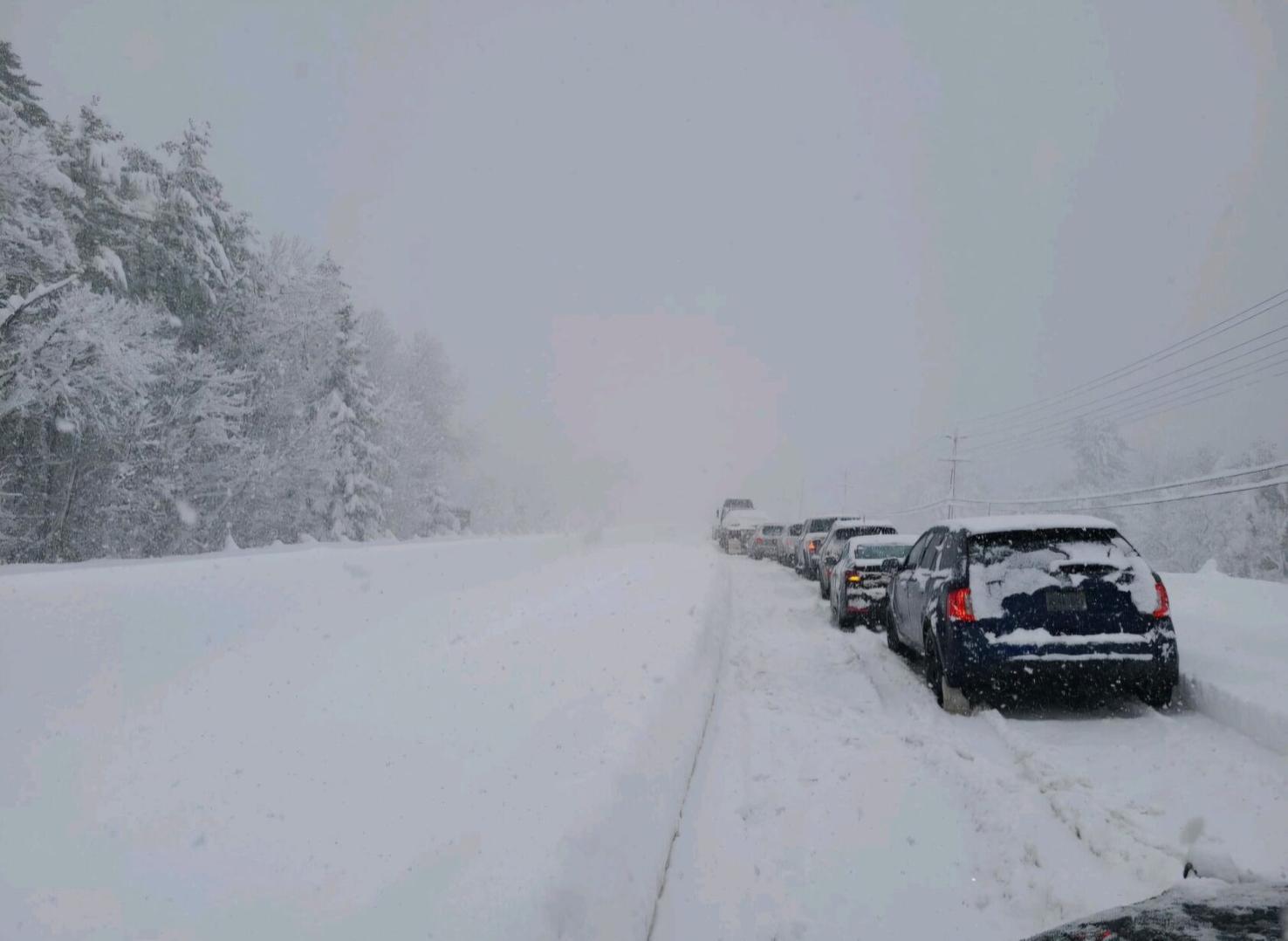
‘No movement at all’: Snowstorms in Ontario’s cottage country strand motorists, drop more than a metre of snow
Saturday, February 8, 2020
First childhood flu helps explain why virus hits some people harder than others

Taking temperature of child (stock image).
Why are some people better able to fight off the flu than others? Part of the answer, according to a new study, is related to the first flu strain we encounter in childhood.
Scientists from UCLA and the University of Arizona have found that people's ability to fight off the flu virus is determined not only by the subtypes of flu they have had throughout their lives, but also by the sequence in which they are been infected by the viruses. Their study is published in the open-access journal PLoS Pathogens.
The research offers an explanation for why some people fare much worse than others when infected with the same strain of the flu virus, and the findings could help inform strategies for minimizing the effects of the seasonal flu.
In addition, UCLA scientists, including Professor James Lloyd-Smith, who also was a senior author of the PLoS Pathogens research, recently completed a study that analyzes travel-related screening for the new novel coronavirus 2019-nCoV.
The researchers report that screening travelers is not very effective for the 2019 coronavirus -- that it will catch less than half of infected travelers, on average -- and that most infected travelers are undetectable, meaning that they have no symptoms yet, and are unaware that they have been exposed. So stopping the spread of the virus is not a matter of just enhancing screening methods at airports and other travel hubs.
"This puts the onus on government officials and public health officials to follow up with travelers after they arrive, to isolate them and trace their contacts if they get sick later," said Lloyd-Smith, a UCLA professor of ecology and evolutionary biology. Many governments have started to impose quarantines, or even travel bans, as they realize that screening is not sufficient to stop the spread of the coronavirus.
One major concern, Lloyd-Smith said, is that other countries, especially developing nations, lack the infrastructure and resources for those measures, and are therefore vulnerable to importing the disease.
"Much of the public health world is very concerned about the virus being introduced into Africa or India, where large populations exist do not have access to advanced medical care," he said.
The researchers, including scientists from the University of Chicago and the London School of Tropical Hygiene and Medicine, have developed a free online app where people can calculate the effectiveness of travel screening based on a range of parameters.
Solving a decades-old question
The PLoS Pathogens study may help solve a problem that had for decades vexed scientists and health care professionals: why the same strain of the flu virus affects people with various degrees of severity.
A team that included some of the same UCLA and Arizona scientists reported in 2016 that exposure to influenza viruses during childhood gives people partial protection for the rest of their lives against distantly related influenza viruses. Biologists call the idea that past exposure to the flu virus determines a person's future response to infections "immunological imprinting."
The 2016 research helped overturn a commonly held belief that previous exposure to a flu virus conferred little or no immunological protection against strains that can jump from animals into humans, such as those causing the strains known as swine flu or bird flu. Those strains, which have caused hundreds of spillover cases of severe illness and death in humans, are of global concern because they could gain mutations that allow them to readily jump not only from animal populations to humans, but also to spread rapidly from person to person.
In the new study, the researchers investigated whether immunological imprinting could explain people's response to flu strains already circulating in the human population and to what extent it could account for observed discrepancies in how severely the seasonal flu affects people in different age groups.
To track how different strains of the flu virus affect people at different ages, the team analyzed health records that the Arizona Department of Health Services obtains from hospitals and private physicians.
Two subtypes of influenza virus, H3N2 and H1N1, have been responsible for seasonal outbreaks of the flu over the past several decades. H3N2 causes the majority of severe cases in high-risk elderly people and the majority of deaths from the flu. H1N1 is more likely to affect young and middle-aged adults, and causes fewer deaths.
The health record data revealed a pattern: People first exposed to the less severe strain, H1N1, during childhood were less likely to end up hospitalized if they encountered H1N1 again later in life than people who were first exposed to H3N2. And people first exposed to H3N2 received extra protection against H3N2 later in life.
The researchers also analyzed the evolutionary relationships between the flu strains. H1N1 and H3N2, they learned, belong to two separate branches on the influenza "family tree," said James Lloyd-Smith, a UCLA professor of ecology and evolutionary biology and one of the study's senior authors. While infection with one does result in the immune system being better prepared to fight a future infection from the other, protection against future infections is much stronger when one is exposed to strains from the same group one has battled before, he said.
The records also revealed another pattern: People whose first childhood exposure was to H2N2, a close cousin of H1N1, did not have a protective advantage when they later encountered H1N1. That phenomenon was much more difficult to explain, because the two subtypes are in the same group, and the researchers' earlier work showed that exposure to one can, in some cases, grant considerable protection against the other.
"Our immune system often struggles to recognize and defend against closely related strains of seasonal flu, even though these are essentially the genetic sisters and brothers of strains that circulated just a few years ago," said lead author Katelyn Gostic, who was a UCLA doctoral student in Lloyd-Smith's laboratory when the study was conducted and is now a postdoctoral fellow at the University of Chicago. "This is perplexing because our research on bird flu shows that deep in our immune memory, we have some ability to recognize and defend against the distantly related, genetic third cousins of the strains we saw as children.
"We hope that by studying differences in immunity against bird flus -- where our immune system shows a natural ability to deploy broadly effective protection -- and against seasonal flus -- where our immune system seems to have bigger blind spots -- we can uncover clues useful to universal influenza vaccine development."
Around the world, influenza remains a major killer. The past two flu seasons have been more severe than expected, said Michael Worobey, a co-author of the study and head of the University of Arizona's department of ecology and evolutionary biology. In the 2017-18 season, 80,000 people died in the U.S., more than in the swine flu pandemic of 2009, he said.
People who had their first bout of flu as children in 1955 -- when the H1N1 was circulating but the H3N2 virus was not -- were much more likely to be hospitalized with an H3N2 infection than an H1N1 infection last year, when both strains were circulating, Worobey said.
"The second subtype you're exposed to is not able to create an immune response that is as protective and durable as the first," he said.
The researchers hope that their findings could help predict which age groups might be severely affected during future flu seasons based on the subtype circulating. That information could also help health officials prepare their response, including decisions about who should receive certain vaccines that are only available in limited quantities.
The research was funded by the National Institutes of Health, the National Science Foundation, DARPA and the David and Lucile Packard Foundation. In 2018, the NIH's National Institute of Allergy and Infectious Diseases announced a strategic plan to develop a universal flu vaccine.
The study's co-authors are Rebecca Bridge of the Arizona Department of Health Services and Cecile Viboud of the Fogarty International Center at the NIH.
Story Source:
Materials provided by University of California - Los Angeles. Original written by Stuart Wolpert and Daniel Stolte. Note: Content may be edited for style and length.
Wednesday, February 5, 2020
First childhood flu helps explain why virus hits some people harder than others
Taking temperature of child (stock image).
Why are some people better able to fight off the flu than others? Part of the answer, according to a new study, is related to the first flu strain we encounter in childhood.
Scientists from UCLA and the University of Arizona have found that people's ability to fight off the flu virus is determined not only by the subtypes of flu they have had throughout their lives, but also by the sequence in which they are been infected by the viruses. Their study is published in the open-access journal PLoS Pathogens.
The research offers an explanation for why some people fare much worse than others when infected with the same strain of the flu virus, and the findings could help inform strategies for minimizing the effects of the seasonal flu.
In addition, UCLA scientists, including Professor James Lloyd-Smith, who also was a senior author of the PLoS Pathogens research, recently completed a study that analyzes travel-related screening for the new novel coronavirus 2019-nCoV.
The researchers report that screening travelers is not very effective for the 2019 coronavirus -- that it will catch less than half of infected travelers, on average -- and that most infected travelers are undetectable, meaning that they have no symptoms yet, and are unaware that they have been exposed. So stopping the spread of the virus is not a matter of just enhancing screening methods at airports and other travel hubs.
"This puts the onus on government officials and public health officials to follow up with travelers after they arrive, to isolate them and trace their contacts if they get sick later," said Lloyd-Smith, a UCLA professor of ecology and evolutionary biology. Many governments have started to impose quarantines, or even travel bans, as they realize that screening is not sufficient to stop the spread of the coronavirus.
One major concern, Lloyd-Smith said, is that other countries, especially developing nations, lack the infrastructure and resources for those measures, and are therefore vulnerable to importing the disease.
"Much of the public health world is very concerned about the virus being introduced into Africa or India, where large populations exist do not have access to advanced medical care," he said.
The researchers, including scientists from the University of Chicago and the London School of Tropical Hygiene and Medicine, have developed a free online app where people can calculate the effectiveness of travel screening based on a range of parameters.
Solving a decades-old question
The PLoS Pathogens study may help solve a problem that had for decades vexed scientists and health care professionals: why the same strain of the flu virus affects people with various degrees of severity.
A team that included some of the same UCLA and Arizona scientists reported in 2016 that exposure to influenza viruses during childhood gives people partial protection for the rest of their lives against distantly related influenza viruses. Biologists call the idea that past exposure to the flu virus determines a person's future response to infections "immunological imprinting."
The 2016 research helped overturn a commonly held belief that previous exposure to a flu virus conferred little or no immunological protection against strains that can jump from animals into humans, such as those causing the strains known as swine flu or bird flu. Those strains, which have caused hundreds of spillover cases of severe illness and death in humans, are of global concern because they could gain mutations that allow them to readily jump not only from animal populations to humans, but also to spread rapidly from person to person.
In the new study, the researchers investigated whether immunological imprinting could explain people's response to flu strains already circulating in the human population and to what extent it could account for observed discrepancies in how severely the seasonal flu affects people in different age groups.
To track how different strains of the flu virus affect people at different ages, the team analyzed health records that the Arizona Department of Health Services obtains from hospitals and private physicians.
Two subtypes of influenza virus, H3N2 and H1N1, have been responsible for seasonal outbreaks of the flu over the past several decades. H3N2 causes the majority of severe cases in high-risk elderly people and the majority of deaths from the flu. H1N1 is more likely to affect young and middle-aged adults, and causes fewer deaths.
The health record data revealed a pattern: People first exposed to the less severe strain, H1N1, during childhood were less likely to end up hospitalized if they encountered H1N1 again later in life than people who were first exposed to H3N2. And people first exposed to H3N2 received extra protection against H3N2 later in life.
The researchers also analyzed the evolutionary relationships between the flu strains. H1N1 and H3N2, they learned, belong to two separate branches on the influenza "family tree," said James Lloyd-Smith, a UCLA professor of ecology and evolutionary biology and one of the study's senior authors. While infection with one does result in the immune system being better prepared to fight a future infection from the other, protection against future infections is much stronger when one is exposed to strains from the same group one has battled before, he said.
The records also revealed another pattern: People whose first childhood exposure was to H2N2, a close cousin of H1N1, did not have a protective advantage when they later encountered H1N1. That phenomenon was much more difficult to explain, because the two subtypes are in the same group, and the researchers' earlier work showed that exposure to one can, in some cases, grant considerable protection against the other.
"Our immune system often struggles to recognize and defend against closely related strains of seasonal flu, even though these are essentially the genetic sisters and brothers of strains that circulated just a few years ago," said lead author Katelyn Gostic, who was a UCLA doctoral student in Lloyd-Smith's laboratory when the study was conducted and is now a postdoctoral fellow at the University of Chicago. "This is perplexing because our research on bird flu shows that deep in our immune memory, we have some ability to recognize and defend against the distantly related, genetic third cousins of the strains we saw as children.
"We hope that by studying differences in immunity against bird flus -- where our immune system shows a natural ability to deploy broadly effective protection -- and against seasonal flus -- where our immune system seems to have bigger blind spots -- we can uncover clues useful to universal influenza vaccine development."
Around the world, influenza remains a major killer. The past two flu seasons have been more severe than expected, said Michael Worobey, a co-author of the study and head of the University of Arizona's department of ecology and evolutionary biology. In the 2017-18 season, 80,000 people died in the U.S., more than in the swine flu pandemic of 2009, he said.
People who had their first bout of flu as children in 1955 -- when the H1N1 was circulating but the H3N2 virus was not -- were much more likely to be hospitalized with an H3N2 infection than an H1N1 infection last year, when both strains were circulating, Worobey said.
"The second subtype you're exposed to is not able to create an immune response that is as protective and durable as the first," he said.
The researchers hope that their findings could help predict which age groups might be severely affected during future flu seasons based on the subtype circulating. That information could also help health officials prepare their response, including decisions about who should receive certain vaccines that are only available in limited quantities.
The research was funded by the National Institutes of Health, the National Science Foundation, DARPA and the David and Lucile Packard Foundation. In 2018, the NIH's National Institute of Allergy and Infectious Diseases announced a strategic plan to develop a universal flu vaccine.
The study's co-authors are Rebecca Bridge of the Arizona Department of Health Services and Cecile Viboud of the Fogarty International Center at the NIH.
Story Source:
Materials provided by University of California - Los Angeles. Original written by Stuart Wolpert and Daniel Stolte. Note: Content may be edited for style and length.
Thursday, December 12, 2019
Greenland ice losses rising faster than expected

Melting icebergs by the coast of Greenland
Greenland is losing ice seven times faster than in the 1990s and is tracking the Intergovernmental Panel on Climate Change's high-end climate warming scenario, which would see 40 million more people exposed to coastal flooding by 2100.
A team of 96 polar scientists from 50 international organisations have produced the most complete picture of Greenland ice loss to date. The Ice Sheet Mass Balance Inter-comparison Exercise (IMBIE) Team combined 26 separate surveys to compute changes in the mass of Greenland's ice sheet between 1992 and 2018. Altogether, data from 11 different satellite missions were used, including measurements of the ice sheet's changing volume, flow and gravity.
The findings, published today in Nature today, show that Greenland has lost 3.8 trillion tonnes of ice since 1992 -- enough to push global sea levels up by 10.6 millimetres. The rate of ice loss has risen from 33 billion tonnes per year in the 1990s to 254 billion tonnes per year in the last decade -- a seven-fold increase within three decades.
The assessment, led by Professor Andrew Shepherd at the University of Leeds and Dr Erik Ivins at NASA's Jet Propulsion Laboratory in California, was supported by the European Space Agency (ESA) and the US National Aeronautics and Space Administration (NASA).
In 2013, the Intergovernmental Panel on Climate Change (IPCC) predicted that global sea levels will rise by 60 centimetres by 2100, putting 360 million people at risk of annual coastal flooding. But this new study shows that Greenland's ice losses are rising faster than expected and are instead tracking the IPCC's high-end climate warming scenario, which predicts 7 centimetres more.
Professor Shepherd said: "As a rule of thumb, for every centimetre rise in global sea level another six million people are exposed to coastal flooding around the planet."
"On current trends, Greenland ice melting will cause 100 million people to be flooded each year by the end of the century, so 400 million in total due to all sea level rise."
"These are not unlikely events or small impacts; they are happening and will be devastating for coastal communities."
The team also used regional climate models to show that half of the ice losses were due to surface melting as air temperatures have risen. The other half has been due to increased glacier flow, triggered by rising ocean temperatures.
Ice losses peaked at 335 billion tonnes per year in 2011 -- ten times the rate of the 1990s -- during a period of intense surface melting. Although the rate of ice loss dropped to an average 238 billion tonnes per year since then, this remains seven times higher and does not include all of 2019, which could set a new high due to widespread summer melting.
Dr Ivins said: "Satellite observations of polar ice are essential for monitoring and predicting how climate change could affect ice losses and sea level rise."
"While computer simulation allows us to make projections from climate change scenarios, the satellite measurements provide prima facie, rather irrefutable, evidence."
"Our project is a great example of the importance of international collaboration to tackle problems that are global in scale."
Guðfinna Aðalgeirsdóttir, Professor of Glaciology at the University of Iceland and lead author of the Intergovernmental Panel on Climate Change's sixth assessment report, who was not involved in the study, said:
"The IMBIE Team's reconciled estimate of Greenland ice loss is timely for the IPCC. Their satellite observations show that both melting and ice discharge from Greenland have increased since observations started."
"The ice caps in Iceland had similar reduction in ice loss in the last two years of their record, but this last summer was very warm here and resulted in higher loss. I would expect a similar increase in Greenland mass loss for 2019."
"It is very important to keep monitoring the big ice sheets to know how much they raise sea level every year."
Story Source:
Materials provided by University of Leeds. Note: Content may be edited for style and length.
Sunday, December 1, 2019
Scientists inch closer than ever to signal from cosmic dawn

Scientists inch closer than ever to signal from cosmic dawn
Around 12 billion years ago, the universe emerged from a great cosmic dark age as the first stars and galaxies lit up. With a new analysis of data collected by the Murchison Widefield Array (MWA) radio telescope, scientists are now closer than ever to detecting the ultra-faint signature of this turning point in cosmic history.
In a paper on the preprint site ArXiv and soon to be published in the Astrophysical Journal, researchers present the first analysis of data from a new configuration of the MWA designed specifically to look for the signal of neutral hydrogen, the gas that dominated the universe during the cosmic dark age. The analysis sets a new limit -- the lowest limit yet -- for the strength of the neutral hydrogen signal.
"We can say with confidence that if the neutral hydrogen signal was any stronger than the limit we set in the paper, then the telescope would have detected it," said Jonathan Pober, an assistant professor of physics at Brown University and corresponding author on the new paper. "These findings can help us to further constrain the timing of when the cosmic dark ages ended and the first stars emerged."
The research was led by Wenyang Li, who performed the work as a Ph.D. student at Brown. Li and Pober collaborated with an international group of researchers working with the MWA.
Despite its importance in cosmic history, little is known about the period when the first stars formed, which is known as the Epoch of Reionization (EoR). The first atoms that formed after the Big Bang were positively charged hydrogen ions -- atoms whose electrons were stripped away by the energy of the infant universe. As the universe cooled and expanded, hydrogen atoms reunited with their electrons to form neutral hydrogen. And that's just about all there was in the universe until about 12 billion years ago, when atoms started clumping together to form stars and galaxies. Light from those objects re-ionized the neutral hydrogen, causing it to largely disappear from interstellar space.
The goal of projects like the one happening at MWA is to locate the signal of neutral hydrogen from the dark ages and measure how it changed as the EoR unfolded. Doing so could reveal new and critical information about the first stars -- the building blocks of the universe we see today. But catching any glimpse of that 12-billion-year-old signal is a difficult task that requires instruments with exquisite sensitivity.
When it began operating in 2013, the MWA was an array of 2,048 radio antennas arranged across the remote countryside of Western Australia. The antennas are bundled together into 128 "tiles," whose signals are combined by a supercomputer called the Correlator. In 2016, the number of tiles was doubled to 256, and their configuration across the landscape was altered to improve their sensitivity to the neutral hydrogen signal. This new paper is the first analysis of data from the expanded array.
Neutral hydrogen emits radiation at a wavelength of 21 centimeters. As the universe has expanded over the past 12 billion years, the signal from the EoR is now stretched to about 2 meters, and that's what MWA astronomers are looking for. The problem is there are myriad other sources that emit at the same wavelength -- human-made sources like digital television as well as natural sources from within the Milky Way and from millions of other galaxies.
"All of these other sources are many orders of magnitude stronger than the signal we're trying to detect," Pober said. "Even an FM radio signal that's reflected off an airplane that happens to be passing above the telescope is enough to contaminate the data."
To home in on the signal, the researchers use a myriad of processing techniques to weed out those contaminants. At the same time, they account for the unique frequency responses of the telescope itself.
"If we look at different radio frequencies or wavelengths, the telescope behaves a little differently," Pober said. "Correcting for the telescope response is absolutely critical for then doing the separation of astrophysical contaminants and the signal of interest."
Those data analysis techniques combined with the expanded capacity of the telescope itself resulted in a new upper bound of the EoR signal strength. It's the second consecutive best-limit-to-date analysis to be released by MWA and raises hope that the experiment will one day detect the elusive EoR signal.
"This analysis demonstrates that the phase two upgrade had a lot of its desired effects and that the new analysis techniques will improve future analyses," Pober said. "The fact that MWA has now published back-to-back the two best limits on the signal gives momentum to the idea that this experiment and its approach has a lot of promise."
The research was supported in part by the U.S. National Science Foundation (grant #1613040). The MWA receives support from the Australian government and acknowledges Wajarri Yamatji people as the traditional owners of the observatory site.
Story Source:
Materials provided by Brown University. Note: Content may be edited for style and length.
Saturday, November 30, 2019
Babies in the womb may see more than we thought

Illustration of fetus inside womb
By the second trimester, long before a baby's eyes can see images, they can detect light.
But the light-sensitive cells in the developing retina -- the thin sheet of brain-like tissue at the back of the eye -- were thought to be simple on-off switches, presumably there to set up the 24-hour, day-night rhythms parents hope their baby will follow.
University of California, Berkeley, scientists have now found evidence that these simple cells actually talk to one another as part of an interconnected network that gives the retina more light sensitivity than once thought, and that may enhance the influence of light on behavior and brain development in unsuspected ways.
In the developing eye, perhaps 3% of ganglion cells -- the cells in the retina that send messages through the optic nerve into the brain -- are sensitive to light and, to date, researchers have found about six different subtypes that communicate with various places in the brain. Some talk to the suprachiasmatic nucleus to tune our internal clock to the day-night cycle. Others send signals to the area that makes our pupils constrict in bright light.
But others connect to surprising areas: the perihabenula, which regulates mood, and the amygdala, which deals with emotions.
In mice and monkeys, recent evidence suggests that these ganglion cells also talk with one another through electrical connections called gap junctions, implying much more complexity in immature rodent and primate eyes than imagined.
"Given the variety of these ganglion cells and that they project to many different parts of the brain, it makes me wonder whether they play a role in how the retina connects up to the brain," said Marla Feller, a UC Berkeley professor of molecular and cell biology and senior author of a paper that appeared this month in the journal Current Biology. "Maybe not for visual circuits, but for non-vision behaviors. Not only the pupillary light reflex and circadian rhythms, but possibly explaining problems like light-induced migraines, or why light therapy works for depression."
Parallel systems in developing retina
The cells, called intrinsically photosensitive retinal ganglion cells (ipRGCs), were discovered only 10 years ago, surprising those like Feller who had been studying the developing retina for nearly 20 years. She played a major role, along with her mentor, Carla Shatz of Stanford University, in showing that spontaneous electrical activity in the eye during development -- so-called retinal waves -- is critical for setting up the correct brain networks to process images later on.
Hence her interest in the ipRGCs that seemed to function in parallel with spontaneous retinal waves in the developing retina.
"We thought they (mouse pups and the human fetus) were blind at this point in development," said Feller, the Paul Licht Distinguished Professor in Biological Sciences and a member of UC Berkeley's Helen Wills Neuroscience Institute. "We thought that the ganglion cells were there in the developing eye, that they are connected to the brain, but that they were not really connected to much of the rest of the retina, at that point. Now, it turns out they are connected to each other, which was a surprising thing."
UC Berkeley graduate student Franklin Caval-Holme combined two-photon calcium imaging, whole-cell electrical recording, pharmacology and anatomical techniques to show that the six types of ipRGCs in the newborn mouse retina link up electrically, via gap junctions, to form a retinal network that the researchers found not only detects light, but responds to the intensity of the light, which can vary nearly a billionfold.
Gap junction circuits were critical for light sensitivity in some ipRGC subtypes, but not others, providing a potential avenue to determine which ipRGC subtypes provide the signal for specific non-visual behaviors that light evokes.
"Aversion to light, which pups develop very early, is intensity-dependent," suggesting that these neural circuits could be involved in light-aversion behavior, Caval-Holme said. "We don't know which of these ipRGC subtypes in the neonatal retina actually contributes to the behavior, so it will be very interesting to see what role all these different subtypes have."
The researchers also found evidence that the circuit tunes itself in a way that could adapt to the intensity of light, which probably has an important role in development, Feller said.
"In the past, people demonstrated that these light-sensitive cells are important for things like the development of the blood vessels in the retina and light entrainment of circadian rhythms, but those were kind of a light on/light off response, where you need some light or no light," she said. "This seems to argue that they are actually trying to code for many different intensities of light, encoding much more information than people had previously thought."
The research was supported by the National Institutes of Health (NIH F31EY028022-03, RO1EY019498, RO1EY013528, P30EY003176).
Story Source:
Materials provided by University of California - Berkeley. Original written by Robert Sanders. Note: Content may be edited for style and length.
Monday, November 18, 2019
Opioid prescription doses are increasingly being tapered, often more rapidly than recommended

Opiods
Stigma and safety fears have made daily dose tapering of opioid prescriptions more common. New research from UC Davis Health physicians, however, shows tapering can occur at rates as much as six times higher than recommended, putting patients at risk of withdrawal, uncontrolled pain or mental health crises.
The study -- "Trends and Rapidity of Dose Tapering Among Patients Prescribed Long-term Opioid Therapy, 2008-2017" -- is published in JAMA Network Open. The results also will be presented at the Nov. 16-19 North American Primary Care Research Group meeting in Toronto.
"Tapering plans should be based on the needs and histories of each patient and adjusted as needed to avoid adverse outcomes," said study author Alicia Agnoli, assistant professor of family and community medicine. "Unfortunately, a lot of tapering occurs due to policy pressures and a rush to get doses below a specific and sometimes arbitrary threshold. That approach can be detrimental in the long run."
In 2016, the U.S. Centers for Disease Control and Prevention (CDC) recommended dose tapering, or a slow reduction in prescription opioid doses over time, if the risks of continuing opioids outweigh the benefits. That point in time is usually when a patient is taking 90 morphine milligram equivalents -- or MMEs -- each day, and that dose is no longer reducing pain or improving daily functions. The CDC advises a slow decrease of 10% MMEs per month.
The study team set out to examine trends in opioid dose tapering and if tapering rates were consistent with CDC recommendations.
"We wanted to understand how often opioid dose tapering happens, how rapidly patients' doses were being reduced when tapering, and which patients were more likely to have doses tapered," said lead author Joshua Fenton, professor of family and community medicine.
Tapering faster than recommended
Fenton and Agnoli evaluated medical and pharmacy claims and enrollment records for more than 100,000 commercial insurance and Medicare Advantage enrollees, representing a diverse mixture of ages, races, ethnicities and locations across the U.S. They focused on individuals whose opioid doses were stable for at least a year and identified tapering patients as those with a 15% or more reduction in daily MMEs during a seven-month follow-up period.
They found that dose tapering became more common throughout the study period of 2008-2017, with the biggest jump following the CDC's 2016 prescribing guidelines. Tapering increased from 10.5% to 13.7% from 2008 to 2015, and from 16.2% to 22.4% from 2016 to 2017. Tapering was much more common in patients prescribed higher opioid dosages.
They also found that the rate of dose reduction often was well beyond the CDC's recommendation of 10% per month. The average reduction overall was 27.6% per month. Nearly 20% of patients tapered at a rate of 40% per month, and 5% tapered at a rate faster than 60% per month.
The 2016 policy could have been misinterpreted, leading many prescribers and health systems to insist on faster-than-recommended tapering, according to Agnoli.
"There is definitely a lot of pressure to reduce opioid use among patients, but there also is a need for more training and guidance for prescribers on how to help them safely do so," Agnoli said.
Women and tapering
Fenton and Agnoli also identified patient variables associated with tapering and uncovered an interesting difference in tapering rates based on sex.
While men have much higher rates of opioid use disorder and adverse outcomes related to opioids, women were more likely than men to have their opioid doses tapered.
"We think this has a lot to do with the gender dynamics of pain management and the physician-patient relationship," Agnoli said. "How women experience pain and discuss pain with their physicians is perhaps very different than men. There also could be some sex bias in terms of the patients that physicians choose to initiate conversations with about dose reduction."
Minimizing tapering risks
The researchers hope to build on this work to inform best practices for safe decision-making around dose reduction for all patients prescribed opioids.
"Ultimately, we want to clarify the effects of tapering on patients and how to help them taper to maximize benefits and minimize risks," Fenton said. "We expect this line of research will have important implications for how physicians manage and monitor patients who are undergoing opioid tapering."
Collaborators on this research were Guibo Xing, Daniel Tancredi, Anthony Jerant and Elizabeth Magnan of UC Davis Health, and Lillian Hang and Aylin Altan of OptumLabs in Minneapolis.
Their study was supported by UC Davis Health and OptumLabs and is available online.
Story Source:
Materials provided by University of California - Davis Health. Note: Content may be edited for style and length.
Subscribe to:
Posts (Atom)