Showing posts with label be. Show all posts
Showing posts with label be. Show all posts
Friday, December 6, 2024
The secret to our big brains might be in our gut
Brain tissue is among the most energetically costly in the body, and as a result, larger-brained mammals require more energy to support brain growth and maintenance. Exactly which biological changes allowed human ancestors to meet the very high needs for energy as they evolved larger brains has remained unclear. A new Northwestern University study points to the role of gut microbes, tiny living organisms in our digestive system that help break down food and produce energy.
In a controlled lab experiment, researchers implanted microbes from two large-brain primate species (human and squirrel monkey), and one small-brain primate species (macaque), into mice.
Their findings showed the mice with microbes from large-brain primate species produced and used more energy, while those with microbes from the small-brain species stored more energy as fat.
The data is the first to show gut microbes from different animal species shape variations in biology between animal species and supports the hypothesis that gut microbes might influence evolution by changing how an animal's body works.
The study offers a new perspective on human evolution, particularly the evolution of our large brains.
The findings will be published in the journal Microbial Genomics on Dec. 2.
Prior studies have compared the influence of genes and the environment on primates with bigger and smallerbrains. However, there are very few studies comparing how different primates use energy. Even less information is available on how metabolism develops in different primate species.
"We know the community of microbes living in the large intestine can produce compounds that affect aspects of human biology -- for example, causing changes to metabolism that can lead to insulin resistance and weight gain," said the study's first author Katherine Amato, associate professor of anthropology at Northwestern.
"Variation in the gut microbiota is an unexplored mechanism in which primate metabolism could facilitate different brain-energetic requirements," Amato said.
After introducing the gut microbes into microbe-free mice, the researchers measured changes in mouse physiology over time, glucose, liver function and other traits. They also measured differences in the types of microbes and the compounds they were producing in each group of mice.
The researchers expected to find microbes from different primates would lead to differences in the biology of the mice inoculated with them. They also expected mice with human microbes to have the greatest difference in biology from mice with "While we did see that human-inoculated mice had some differences, the strongest pattern was the difference between large-brained primates (humans and squirrel monkeys) and smaller-brained primates (macaques)," Amato said.
The mice given microbes from the humans and squirrel monkeys had similar biology, even though these two larger-brained primate species are not close evolutionary relatives of one another. This suggests something othermicrobes from the other two than shared ancestry -- likely their shared trait of large brains is driving the biological similarities seen in the mice inoculated with their microbes.
"These findings suggest that when humans and squirrel monkeys both separately evolved larger brains, their microbial communities changed in similar ways to help provide the necessary energy," Amato said.
In future studies, the researchers hope to run the experiment with microbes from additional primate species varying in brain size. They would also like to collect more information on the types of compounds the microbes are producing and gather additional data on the biological traits of the hosts such as immune function and behavior.species.including weight gain, fat percentage, fasting

Friday, November 29, 2024
3 Oilers players who could be dangled in a potential trade
The Edmonton Oilers will be very involved in trade discussions in the months leading up to the NHL’s Trade Deadline, but who do they have to give up?
 After a disappointing start to the season, the Oilers could use some reinforcements to their defensive group. It was reported late last month that Edmonton GM Stan Bowman was “aggressively” working the trade market to improve this Oilers team, and now we have our first target.
The Pittsburgh Penguins appear to be on the verge of a fire sale after a poor start, with defenceman Marcus Pettersson being a likely candidate to be shipped out. The Athletic’s Josh Yohe, who covers the Penguins, mentioned that the Oilers have shown interest in the 28-year-old Swede.
Yohe also mentioned that the Vancouver Canucks are showing interest alongside Edmonton.
Pettersson is in the final year of a five-year contract that carries a cap hit of $4.025 million and has been among Pittsburgh’s best players early in the season. He is currently getting top-pairing minutes with the Penguins alongside Erik Karlsson. Pettersson has a goal and eight points in 20 games this season.
Pettersson leads all regular Pittsburgh defenders with a 56.54 expected goals-for (xGF) and a 57.79 high-danger chances-for percentage (HDCF%) at five-on-five, according to Natural Stat Trick.
Those rates would put him ahead of Darnell Nurse on the Oilers.
Pittsburgh would be looking to bolster their defensive ranks in any trade that saw Pettersson go the other way. Edmonton could potentially send over a package that includes a first-round pick and perhaps one of Sam O’Reilly or Matt Savoie to entice Penguins GM Kyle Dubas.
Savoie would most likely be the more appealing option, as he holds the distinction of being a former top-10 draft pick. Edmonton will have to be careful in offloading their top prospects; however, as the team’s pipeline for young talent is already quite bare, it is risky, considering Pettersson is set to become a free agent this summer.
Outside of the cost, adding Pettersson would make a world of sense for the Oilers. He would slot in perfectly as a second-pair defenceman and plays a solid defensive style that should blend well with Nurse. The only issue is that the Swede is a left-handed defenceman, meaning one of him or Nurse would have to play their off-side to make that work.
Oilers head coach Kris Knoblauch has shown a willingness to play defenceman on their off-side this year, with Brett Kulak playing RD beside Nurse despite being left-handed. Perhaps the same thing could be done with Pettersson.
The NHL’s trade deadline is still months away, but it’s encouraging that Bowman is reportedly targeting a guy like Pettersson, as he represents a player who would go a long way toward filling some of Edmonton’s most glaring holes.
After a disappointing start to the season, the Oilers could use some reinforcements to their defensive group. It was reported late last month that Edmonton GM Stan Bowman was “aggressively” working the trade market to improve this Oilers team, and now we have our first target.
The Pittsburgh Penguins appear to be on the verge of a fire sale after a poor start, with defenceman Marcus Pettersson being a likely candidate to be shipped out. The Athletic’s Josh Yohe, who covers the Penguins, mentioned that the Oilers have shown interest in the 28-year-old Swede.
Yohe also mentioned that the Vancouver Canucks are showing interest alongside Edmonton.
Pettersson is in the final year of a five-year contract that carries a cap hit of $4.025 million and has been among Pittsburgh’s best players early in the season. He is currently getting top-pairing minutes with the Penguins alongside Erik Karlsson. Pettersson has a goal and eight points in 20 games this season.
Pettersson leads all regular Pittsburgh defenders with a 56.54 expected goals-for (xGF) and a 57.79 high-danger chances-for percentage (HDCF%) at five-on-five, according to Natural Stat Trick.
Those rates would put him ahead of Darnell Nurse on the Oilers.
Pittsburgh would be looking to bolster their defensive ranks in any trade that saw Pettersson go the other way. Edmonton could potentially send over a package that includes a first-round pick and perhaps one of Sam O’Reilly or Matt Savoie to entice Penguins GM Kyle Dubas.
Savoie would most likely be the more appealing option, as he holds the distinction of being a former top-10 draft pick. Edmonton will have to be careful in offloading their top prospects; however, as the team’s pipeline for young talent is already quite bare, it is risky, considering Pettersson is set to become a free agent this summer.
Outside of the cost, adding Pettersson would make a world of sense for the Oilers. He would slot in perfectly as a second-pair defenceman and plays a solid defensive style that should blend well with Nurse. The only issue is that the Swede is a left-handed defenceman, meaning one of him or Nurse would have to play their off-side to make that work.
Oilers head coach Kris Knoblauch has shown a willingness to play defenceman on their off-side this year, with Brett Kulak playing RD beside Nurse despite being left-handed. Perhaps the same thing could be done with Pettersson.
The NHL’s trade deadline is still months away, but it’s encouraging that Bowman is reportedly targeting a guy like Pettersson, as he represents a player who would go a long way toward filling some of Edmonton’s most glaring holes.
Saturday, July 11, 2020
The best material for homemade face masks may be a combination of two fabrics
The best material for homemade face masks
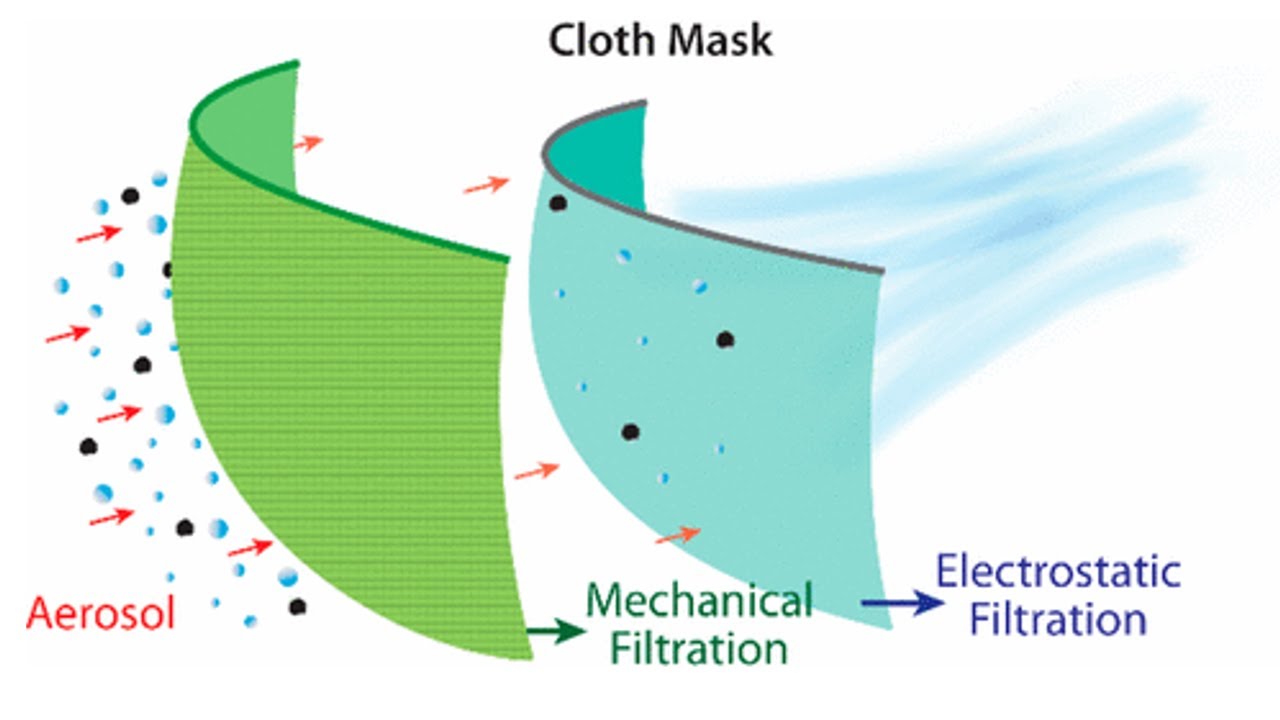
In the wake of the COVID-19 pandemic, the U.S. Centers for Disease Control and Prevention recommends that people wear masks in public. Because N95 and surgical masks are scarce and should be reserved for health care workers, many people are making their own coverings. Now, researchers report in ACS Nano that a combination of cotton with natural silk or chiffon can effectively filter out aerosol particles -- if the fit is good.
SARS-CoV-2, the new coronavirus that causes COVID-19, is thought to spread mainly through respiratory droplets when an infected person coughs, sneezes, speaks or breathes. These droplets form in a wide range of sizes, but the tiniest ones, called aerosols, can easily slip through the openings between certain cloth fibers, leading some people to question whether cloth masks can actually help prevent disease. Therefore, Supratik Guha at the University of Chicago and colleagues wanted to study the ability of common fabrics, alone or in combination, to filter out aerosols similar in size to respiratory droplets.
The researchers used an aerosol mixing chamber to produce particles ranging from 10 nm to 6 μm in diameter. A fan blew the aerosol across various cloth samples at an airflow rate corresponding to a person's respiration at rest, and the team measured the number and size of particles in air before and after passing through the fabric. One layer of a tightly woven cotton sheet combined with two layers of polyester-spandex chiffon -- a sheer fabric often used in evening gowns -- filtered out the most aerosol particles (80-99%, depending on particle size), with performance close to that of an N95 mask material. Substituting the chiffon with natural silk or flannel, or simply using a cotton quilt with cotton-polyester batting, produced similar results. The researchers point out that tightly woven fabrics, such as cotton, can act as a mechanical barrier to particles, whereas fabrics that hold a static charge, like certain types of chiffon and natural silk, serve as an electrostatic barrier. However, a 1% gap reduced the filtering efficiency of all masks by half or more, emphasizing the importance of a properly fitted mask.
The authors acknowledge use of the U.S. Department of Energy's Center for Nanoscale Materials user facility at Argonne National Laboratory and funding from the U.S. Department of Defense's Vannevar Bush Fellowship.
Story Source:
Materials provided by American Chemical Society. Note: Content may be edited for style and length.
Journal Reference:
- Abhiteja Konda, Abhinav Prakash, Gregory A. Moss, Michael Schmoldt, Gregory D. Grant, Supratik Guha. Aerosol Filtration Efficiency of Common Fabrics Used in Respiratory Cloth Masks. ACS Nano, 2020; DOI: 10.1021/acsnano.0c03252
Friday, January 24, 2020
Beauty sleep could be real, say body clock biologists

Woman waking up from bed (stock image).
Biologists from The University of Manchester have explained for the first time why having a good night's sleep really could prepare us for the rigours of the day ahead.
The study in mice and published in Nature Cell Biology, shows how the body clock mechanism boosts our ability to maintain our bodies when we are most active.
And because we know the body clock is less precise as we age, the discovery, argues lead author Professor Karl Kadler, may one day help unlock some of the mysteries of aging.
The discovery throws fascinating light on the body's extracellular matrix -which provides structural and biochemical support to cells in the form of connective tissue such as bone, skin, tendon and cartilage.
Over half our body weight is matrix, and half of this is collagen -- and scientists have long understood it is fully formed by the time we reach the age of 17.
But now the researchers have discovered there are two types of fibrils -- the rope-like structures of collagen that are woven by the cells to form tissues.
Thicker fibrils measuring about 200 nanometres in diameter -- a million million times smaller than a pinhead -- are permanent and stay with us throughout our lives, unchanged from the age of 17.
But thinner fibrils measuring 50 nanometres, they find, are sacrificial, breaking as we subject the body to the rigours of the day but replenishing when we rest at night.
The collagen was observed by mass spectrometry and the mouse fibrils were observed using state of the art volumetric electron microscopy -- funded by the Wellcome Trust -- every 4 hours over 2 days.
When the body clock genes where knocked out in mice, the thin and thick fibrils were amalgamated randomly.
"Collagen provides the body with structure and is our most abundant protein, ensuring the integrity, elasticity and strength of the body's connective tissue," said Professor Kadler
"It's intuitive to think our matrix should be worn down by wear and tear, but it isn't and now we know why: our body clock makes an element which is sacrificial and can be replenished, protecting the permanent parts of the matrix.
He added: "So if you imagine the bricks in the walls of a room as the permanent part, the paint on the walls could be seen as the sacrificial part which needs to be replenished every so often.
"And just like you need to oil a car and keep its radiator topped up with water, these thin fibrils help maintain the body's matrix."
"Knowing this could have implications on understanding our biology at its most fundamental level. It might, for example, give us some deeper insight into how wounds heal, or how we age.
Story Source:
Materials provided by University of Manchester. Note: Content may be edited for style and length.
Wednesday, January 15, 2020
High temperatures due to global warming will be dramatic even for tardigrades

Tardigrade (stock image).
Global warming, a major aspect of climate change, is already causing a wide range of negative impacts on many habitats of our planet. It is thus of the utmost importance to understand how rising temperatures may affect animal health and welfare.
A research group from Department of Biology, University of Copenhagen has just shown that tardigrades are very vulnerable to long-term high temperature exposures. The tiny animals, in their desiccated state, are best known for their extraordinary tolerance to extreme environments.
In a study published recently in Scientific Reports, Ricardo Neves and Nadja Møbjerg and colleagues at Department of Biology, University of Copenhagen present results on the tolerance to high temperatures of a tardigrade species.
Tardigrades, commonly known as water bears or moss piglets, are microscopic invertebrates distributed worldwide in marine, freshwater and terrestrial microhabitats.
Ricardo Neves, Nadja Møbjerg and colleagues investigated the tolerance to high temperatures of Ramazzottius varieornatus, a tardigrade frequently found in transient freshwater habitats.
"The specimens used in this study were obtained from roof gutters of a house located in Nivå, Denmark. We evaluated the effect of exposures to high temperature in active and desiccated tardigrades, and we also investigated the effect of a brief acclimation period on active animals," explains postdoc Ricardo Neves.
Rather surprisingly the researchers estimated that for non-acclimated active tardigrades the median lethal temperature is 37.1°C, though a short acclimation periods leads to a small but significant increase of the median lethal temperature to 37.6°C. Interestingly, this temperature is not far from the currently measured maximum temperature in Denmark, i.e. 36.4°C. As for the desiccated specimens, the authors observed that the estimated 50% mortality temperature is 82.7°C following 1 hour exposures, though a significant decrease to 63.1°C following 24 hour exposures was registered.
The research group used logistic models to estimate the median lethal temperature (at which 50% mortality is achieved) both for active and desiccated tardigrades.
Approximately 1300 tardigrade species have been described so far. The body of these minute animals is barrel-shaped (or dorsoventrally compressed) and divided into a head and a trunk with four pairs of legs. Their body length varies between 50 micrometers and 1.2 millimeters. Apart from their impressive ability to tolerate extreme environments, tardigrades are also very interesting because of their close evolutionary relationship with arthropods (e.g., insects, crustaceans, spiders).
As aquatic animals, tardigrades need to be surrounded in a film of water to be in their active state (i.e., feeding and reproducing). However, these critters are able to endure periods of desiccation (anhydrobiosis) by entering cryptobiosis, i.e., a reversible ametabolic state common especially among limno-terrestrial species. Succinctly, tardigrades enter the so-called "tun" state by contracting their anterior-posterior body axis, retracting their legs and rearranging the internal organs. This provides them with the capacity to tolerate severe environmental conditions including oxygen depletion (anoxybiosis), high toxicant concentrations (chemobiosis), high solute concentration (osmobiosis) and extremely low temperatures (cryobiosis).
The extraordinary tolerance of tardigrades to extreme environments includes also high temperature endurance. Some tardigrade species were reported to tolerate temperatures as high as 151°C. However, the exposure time was only of 30 minutes. Other studies on thermotolerance of desiccated (anhydrobiotic) tardigrades revealed that exposures higher than 80°C for 1 hour resulted in high mortality, with almost all specimens dying at temperatures above 103°C. It remained, yet, unknown how anhydrobiotic tardigrades handle exposures to high temperatures for long periods, i.e., exceeding 1 hour.
"From this study, we can conclude that active tardigrades are vulnerable to high temperatures, though it seems that these critters would be able to acclimatize to increasing temperatures in their natural habitat. Desiccated tardigrades are much more resilient and can endure temperatures much higher than those endured by active tardigrades. However, exposure-time is clearly a limiting factor that constrains their tolerance to high temperatures," says Ricardo Neves.
Indeed, although tardigrades are able to tolerate a diverse set of severe environmental conditions, their endurance to high temperatures is noticeably limited and this might actually be the Achilles heel of these otherwise super-resistant animals.
Story Source:
Materials provided by Faculty of Science - University of Copenhagen. Note: Content may be edited for style and length.
Tuesday, December 24, 2019
Black holes – to be or not to be?

Those enigmatic black holes that lead to places unknown may not be what we thought they were – or at least that’s what some scientists think.
Since first proposed in 1784 by John Mitchell and their prediction in 1915 by Einstein’s theory of general relativity, evidence supporting the idea of black holes has continued to be found.
Described as infinitely dense points in space time – where not even light can escape – the presence of a black hole is thus inferred from the gravitational effects on the surrounding material. But what if something else – other than a black hole – could produce these same effects?
Such a question was addressed in two recent papers by a team of scientists at the University of Hawaii. They consider the consequences of replacing all black holes with a class of objects with ‘dark energy’ interiors known as Generic Objects of Dark Energy (GEODEs).
GEODEs, as they are now referred to, were first postulated in 1966 by Russian physicist Erast Gliner who suggested such objects as viable stellar remnants – the end point of stars.
The current understanding of stellar evolution states that for stars massive enough, the stellar remnants would be black holes. However, there are alternative models in which black hole interiors are described by a ‘dark energy’ equation of state – an equation describing the state of matter in terms of its pressure, temperature and volume, for example. Gliner thus proposed that instead of the end stage of stars gravitationally collapsing into black hole singularities, they would collapse into non-singular ‘dark energy’ objects (GEODEs) that only appear to be black holes from the outside.
Fifty years later, the Hawaiian team led by Kevin Croker and Joel Weiner started to look at the Friedman equations – the equations derived in 1922 that describe the expansion of the universe where ultra-dense regions of space such as neutron stars and black holes were treated in the same way as all other regions of space. The current understanding of a black hole is that of a singularity, which is a mathematical construct, and the physicality of such is yet to be understood. What Croker and Weiner found is that in order to incorporate black holes into the framework of an expanding universe, they can’t be singularities. When treated as non-singular GEODEs, they found that if only a fraction of the oldest stars collapsed in this way their averaged contribution would naturally produce the dark energy responsible for the accelerated expansion of the universe.
“If what we thought were black holes are actually objects without singularities, then the accelerated expansion of our universe is a natural consequence of Einstein’s theory of general relativity” – Dr Kevin Croker
The assumption made by cosmologists that the Universe is insensitive to the details of the objects it contains now it seems no longer stands. Not only does this give us a new way of looking at black holes, but also how we look at the Universe and its interconnectedness.
Further support of black holes being more like these GEODEs comes from the binary black hole merger mass found when assuming the colliding binary black holes were instead GEODEs. The resultant mass was greater than if the objects were black holes, and thus more in agreement with the 2016 LIGO-Virgo observations. Of course, this doesn’t confirm the existence of GEODEs just yet and, unfortunately, although observational signatures have been developed, there does not yet seem to be a way to distinguish between the different models.
As well, the GEODEs as proposed by Gliner and described by the team at the University of Hawaii are not the only description of such objects. In 2015, the Gravastar was described by physicists Pawel Mazur and Emil Mottola, and more than 80 years ago George McVittie proposed such a solution in which he describes a mass-particle in an expanding universe.
RSF in perspective
These ideas of objects where the interior region is made of the quantum vacuum – rather than a singularity – is very much in agreement with the unified physics perspective which sees all matter as emerging from the granular Planck scale structure of spacetime, otherwise known as the quantum vacuum. Furthermore, this quantized view of the Universe, as offered by the unified perspective in the form of the generalized holographic approach, similarly describes the expansion of the universe. Notably, the expansion of the Universe as originally proposed by George Lemaitre starts from a primeval super atom, not a singularity. Similarly, when we consider the vacuum energy of a Planck particle as it expands to the size of the Universe, we can explain the expansion of the Universe without the need for dark energy and as well resolving the vacuum catastrophe.
Subscribe to:
Posts (Atom)