Showing posts with label Big. Show all posts
Showing posts with label Big. Show all posts
Friday, December 6, 2024
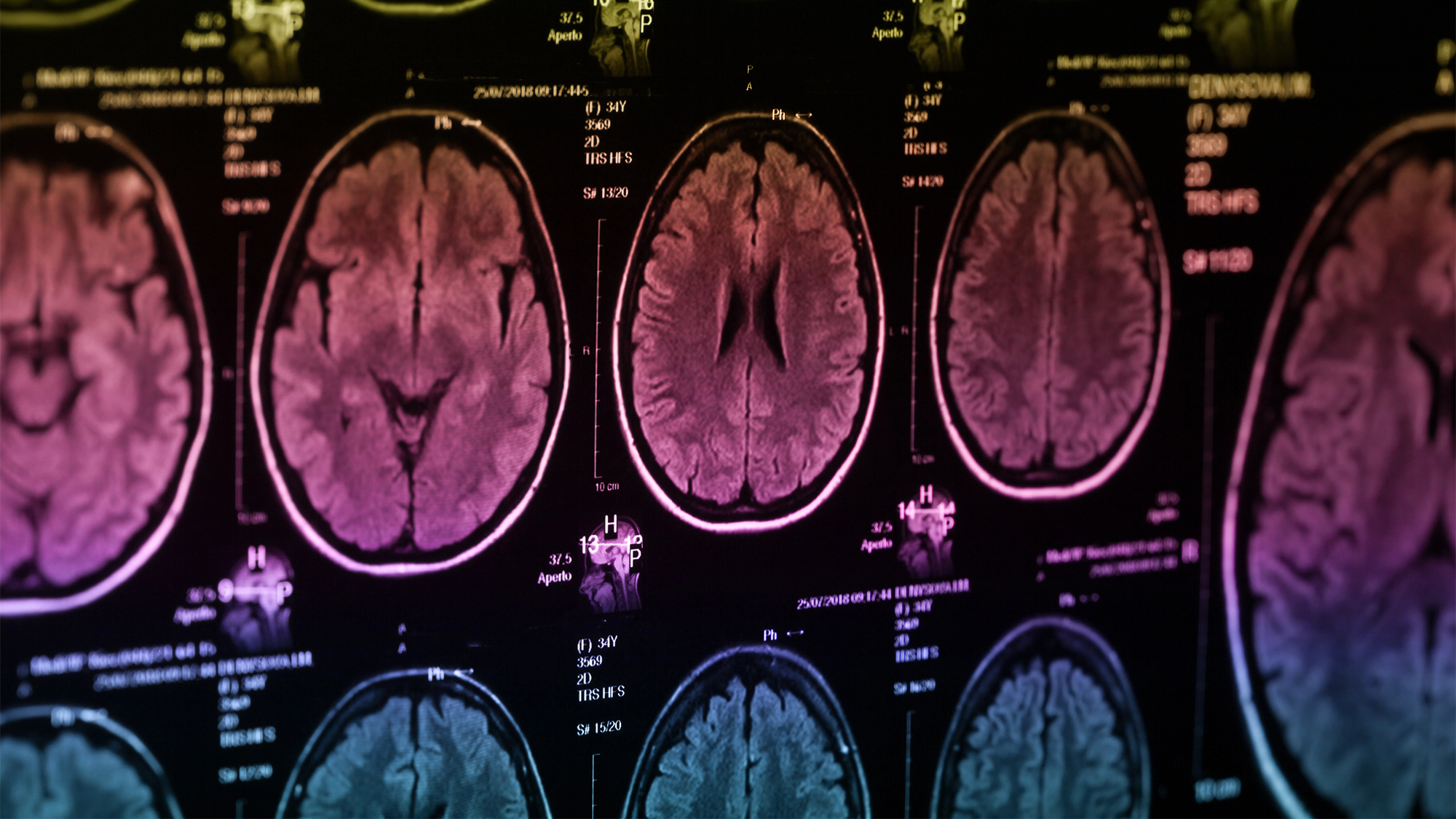
The secret to our big brains might be in our gut
Brain tissue is among the most energetically costly in the body, and as a result, larger-brained mammals require more energy to support brain growth and maintenance. Exactly which biological changes allowed human ancestors to meet the very high needs for energy as they evolved larger brains has remained unclear. A new Northwestern University study points to the role of gut microbes, tiny living organisms in our digestive system that help break down food and produce energy.
In a controlled lab experiment, researchers implanted microbes from two large-brain primate species (human and squirrel monkey), and one small-brain primate species (macaque), into mice.
Their findings showed the mice with microbes from large-brain primate species produced and used more energy, while those with microbes from the small-brain species stored more energy as fat.
The data is the first to show gut microbes from different animal species shape variations in biology between animal species and supports the hypothesis that gut microbes might influence evolution by changing how an animal's body works.
The study offers a new perspective on human evolution, particularly the evolution of our large brains.
The findings will be published in the journal Microbial Genomics on Dec. 2.
Prior studies have compared the influence of genes and the environment on primates with bigger and smallerbrains. However, there are very few studies comparing how different primates use energy. Even less information is available on how metabolism develops in different primate species.
"We know the community of microbes living in the large intestine can produce compounds that affect aspects of human biology -- for example, causing changes to metabolism that can lead to insulin resistance and weight gain," said the study's first author Katherine Amato, associate professor of anthropology at Northwestern.
"Variation in the gut microbiota is an unexplored mechanism in which primate metabolism could facilitate different brain-energetic requirements," Amato said.
After introducing the gut microbes into microbe-free mice, the researchers measured changes in mouse physiology over time, glucose, liver function and other traits. They also measured differences in the types of microbes and the compounds they were producing in each group of mice.
The researchers expected to find microbes from different primates would lead to differences in the biology of the mice inoculated with them. They also expected mice with human microbes to have the greatest difference in biology from mice with "While we did see that human-inoculated mice had some differences, the strongest pattern was the difference between large-brained primates (humans and squirrel monkeys) and smaller-brained primates (macaques)," Amato said.
The mice given microbes from the humans and squirrel monkeys had similar biology, even though these two larger-brained primate species are not close evolutionary relatives of one another. This suggests something othermicrobes from the other two than shared ancestry -- likely their shared trait of large brains is driving the biological similarities seen in the mice inoculated with their microbes.
"These findings suggest that when humans and squirrel monkeys both separately evolved larger brains, their microbial communities changed in similar ways to help provide the necessary energy," Amato said.
In future studies, the researchers hope to run the experiment with microbes from additional primate species varying in brain size. They would also like to collect more information on the types of compounds the microbes are producing and gather additional data on the biological traits of the hosts such as immune function and behavior.species.including weight gain, fat percentage, fasting

Wednesday, September 2, 2020
It's good to masturbate but not ejaculate guys!
So, you need to put both your
finger pushing up the common
duct for urine and semen flow.
Thing is you have push upwards
blocking the semen from going
out.

You should have experienced to
climax now, the dopamine hormone
has done it's work by now.
So this way neither you wasted
your semen nor you lost your
energy like you used to lose
previously.
Tuesday, December 31, 2019
A tiny Galaxy with a Big Heart!

Photo: Hubble image depicting galaxy ESO 495-21 at the center. From NASA/ESA
Evolution of our understanding of Black Holes (BH) has gone from the mathematical outcome with no physical counterpart, up to their detection at the center of various galaxies and visualization of their shadow through the reconstructed image presented for the first time just a few months ago by the EHT global initiative (https://resonancescience.org/the-first-image-of-a-black-hole-is-finally-here/). Now it is thought that every galaxy hosts a BH in its core. When the first BHs were inferred from cosmological observations, we believed they were an extravagant exceptional behavior in the universe. Since, they have proven not so exceptional as they are detected with increased frequency, but they remain an extravagancy, and not for the same reasons.
ESO 495-21 is a galaxy just 3.000 light years across in diameter, very small compared to the almost 53.000 of our Milky Way galaxy. Located 30 million light years away in the constellation of Pyxis, it presents two contrasting features with respect to our galaxy; it forms huge numbers of stars and it hosts an enormous BH in its center, much bigger that what could be expected by its galactic size.
Galaxies that form stars at exceptionally high rates -star nurseries- create stellar newborns up to 1000 times faster than our galaxy, and are called Starburst galaxies. ESO 495-21 is a dwarf starburst galaxy because it is small in size. Usually we would expect that bigger the galaxy more massive the BH in its center. If our galaxy hosts Sagittarius A*, a supermassive BH over four million times as massive as our Sun, one would expect Henize 2-10 -the BH at the center of ESO- to be much smaller. But, the second intriguing observation is that ESO 495-21 galaxy -a 3% size of our galaxy- hosts a supermassive BH at its core, million times as massive as our Sun, too!
This extremely unusual scenario raises questions about our current astrophysical models and the relation between Black holes, galaxies and the universe. This finding is a strong indication that black holes may have come first, and that galaxies form and evolve around them. The question is, how?
do the galaxies form first and then crush material at their centers into black holes, or do pre-existing black holes gather galaxies around them? Do they evolve together—or could the answer be something else entirely?
– ESA/Hubble Information Centre
The NASA/ESA studied the activity bursts and explored the very dense regions a few million years old within ESO 495-21, and the data comprising the images were gathered by the Hubble Space Telescope with the advance camera for surveys and the Wide Field Planetary Camera 2.
RSF in perspective:
This finding is a strong indication that Black Holes came first, so then a question remains… how can a galaxy form and evolve around it, if we have believed BHs to be devouring monsters? The Unified theory developed by Nassim Haramein finds that BHs not only came first but they are in fact the responsible for the matter and posterior galaxy formation, as he has claimed for more than 25 years. Fortunately, astronomical observations not only have been unable to discard his findings and on the contrary, they point out in that same direction. In this sense we could literally say that the BH at the core IS the pumping heart of the galaxy.
By Ines Urdaneta, Research Scientist at RSF
More at:
Hubble observed tiny galaxy with big heart: https://phys.org/news/2019-06-hubble-tiny-galaxy-big-heart.html
Subscribe to:
Posts (Atom)