New ads.

Showing posts with label combination. Show all posts

Saturday, July 11, 2020

The best material for homemade face masks may be a combination of two fabrics

The best material for homemade face masks

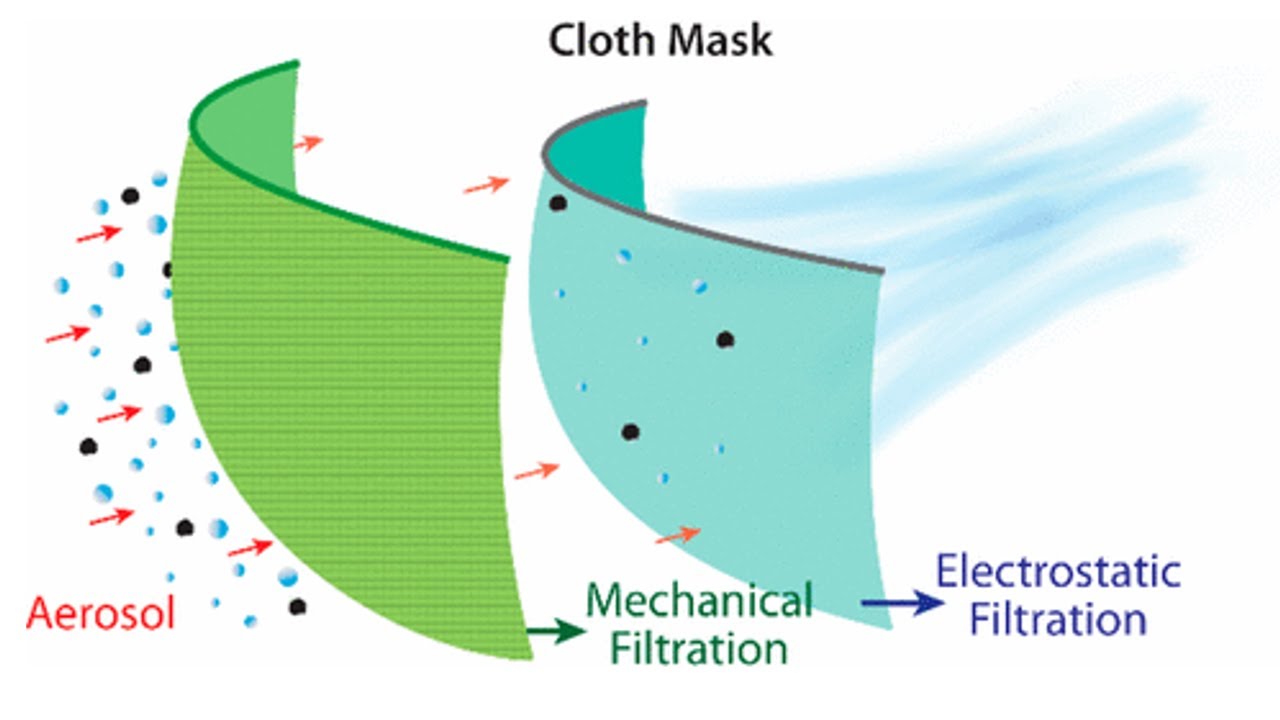
In the wake of the COVID-19 pandemic, the U.S. Centers for Disease Control and Prevention recommends that people wear masks in public. Because N95 and surgical masks are scarce and should be reserved for health care workers, many people are making their own coverings. Now, researchers report in ACS Nano that a combination of cotton with natural silk or chiffon can effectively filter out aerosol particles -- if the fit is good.
SARS-CoV-2, the new coronavirus that causes COVID-19, is thought to spread mainly through respiratory droplets when an infected person coughs, sneezes, speaks or breathes. These droplets form in a wide range of sizes, but the tiniest ones, called aerosols, can easily slip through the openings between certain cloth fibers, leading some people to question whether cloth masks can actually help prevent disease. Therefore, Supratik Guha at the University of Chicago and colleagues wanted to study the ability of common fabrics, alone or in combination, to filter out aerosols similar in size to respiratory droplets.
The researchers used an aerosol mixing chamber to produce particles ranging from 10 nm to 6 μm in diameter. A fan blew the aerosol across various cloth samples at an airflow rate corresponding to a person's respiration at rest, and the team measured the number and size of particles in air before and after passing through the fabric. One layer of a tightly woven cotton sheet combined with two layers of polyester-spandex chiffon -- a sheer fabric often used in evening gowns -- filtered out the most aerosol particles (80-99%, depending on particle size), with performance close to that of an N95 mask material. Substituting the chiffon with natural silk or flannel, or simply using a cotton quilt with cotton-polyester batting, produced similar results. The researchers point out that tightly woven fabrics, such as cotton, can act as a mechanical barrier to particles, whereas fabrics that hold a static charge, like certain types of chiffon and natural silk, serve as an electrostatic barrier. However, a 1% gap reduced the filtering efficiency of all masks by half or more, emphasizing the importance of a properly fitted mask.
The authors acknowledge use of the U.S. Department of Energy's Center for Nanoscale Materials user facility at Argonne National Laboratory and funding from the U.S. Department of Defense's Vannevar Bush Fellowship.

Story Source:
Materials provided by American Chemical SocietyNote: Content may be edited for style and length.

Journal Reference:
  1. Abhiteja Konda, Abhinav Prakash, Gregory A. Moss, Michael Schmoldt, Gregory D. Grant, Supratik Guha. Aerosol Filtration Efficiency of Common Fabrics Used in Respiratory Cloth MasksACS Nano, 2020; DOI: 10.1021/acsnano.0c03252

Saturday, December 7, 2019

Fruit flies live longer with combination drug treatment

Fruit flies live longer with combination drug treatment

A triple drug combination has been used to extend the lifespan of fruit flies by 48% in a new study led by UCL and the Max Planck Institute for Biology of Ageing.
The three drugs are all already in use as medical treatments: lithium as a mood stabiliser, trametinib as a cancer treatment and rapamycin as an immune system regulator.
The findings, published in Proceedings of the National Academy of Sciences (PNAS), suggest that a combination drug treatment may one day be helpful at preventing age-related diseases in people.
"As life expectancies increase, we are also seeing an increase of age-related diseases so there is an urgent need to find ways to improve health in old age," said the study's co-lead author, Dr Jorge Castillo-Quan, who began the research at the UCL Institute of Healthy Ageing before moving to Joslin Diabetes Center, Harvard Medical School.
"Here, by studying fruit flies which age much more rapidly than people, we have found that a combination drug treatment targeting different cellular processes may be an effective way to slow down the ageing process."
The researchers were building on previous studies finding that lithium, trametinib and rapamycin can each extend lifespan in fruit flies (Drosophila), which is supported by other preliminary evidence in mice, worms, and cells, and observational findings in people.
The three drugs all act on different cellular signalling pathways that together form the nutrient sensing network, which is conserved across evolution from worms and flies all the way to humans. This network adjusts what the body is doing in response to changes in nutrient levels. The three drugs in question act on different proteins of this network to slow the ageing process and delay the onset of age-related death.
For the latest study, the researchers gave fruit flies doses of lithium, trametinib and rapamycin, separately and in combination. Each drug individually extended lifespan by an average of 11%, while pairing two drugs extended lifespan by roughly 30%. When the three drugs were combined, the fruit flies lived 48% longer than flies in a control group that were not given the treatment.
"Previous studies in fruit flies have achieved lifespan extensions of about 5-20%, so we found it was quite remarkable that this drug combination enabled them to live 48% longer," Dr Castillo-Quan said.
The researchers found that in addition to acting on separate signalling pathways within the nutrient sensing network, the drugs also appear to complement each other to reduce side effects. Rapamycin has undesirable effects on fat metabolism, which can be similar to insulin resistance in people, but lithium appeared to cancel out this effect when the two drugs were given together.
The researchers will continue their research to better understand exactly how the drugs work in combination with each other, and hope to progress to experiments in more complex animals, such as mice, to gauge the effects on the entire body before eventually progressing to human trials.
Principal investigator, Professor Linda Partridge (UCL Institute of Health Ageing and Max Planck Institute for Biology of Ageing), said: "There is a growing body of evidence that polypills -- pills that combine low doses of multiple pharmaceutical products -- could be effective as a medication to prevent age-related diseases, given the complex nature of the ageing process. This may be possible by combining the drugs we're investigating with other promising drugs, but there is a long way to go before we will be able to roll out effective treatments."
"My research groups are working to understand the mechanism of the ageing process in order to find ways to help people stay healthy for longer. We are not trying to cheat death, but help people be healthy and disease-free in their final years," she said.
The study was funded by the Max Planck Society, American Federation for Aging Research, Glenn Foundation, National Institutes of Health, European Research Council, Research Into Ageing, Parkinson's UK, Wellcome and Academy of Medical Sciences and involved researchers in UCL Genetics, Evolution & Environment, UCL Queen Square Institute of Neurology, UCL Cancer Institute, Max Planck Institute for Biology of Ageing and Harvard University.

Story Source:
Materials provided by University College LondonNote: Content may be edited for style and length.